Mealtime adventures are better with Bibado! Let our award-winning products make a difference to your weaning journey.
 Shop Now
BASKET
Your basket is empty
Mealtime adventures are better with Bibado! Let our award-winning products make a difference to your weaning journey.
Shop Now
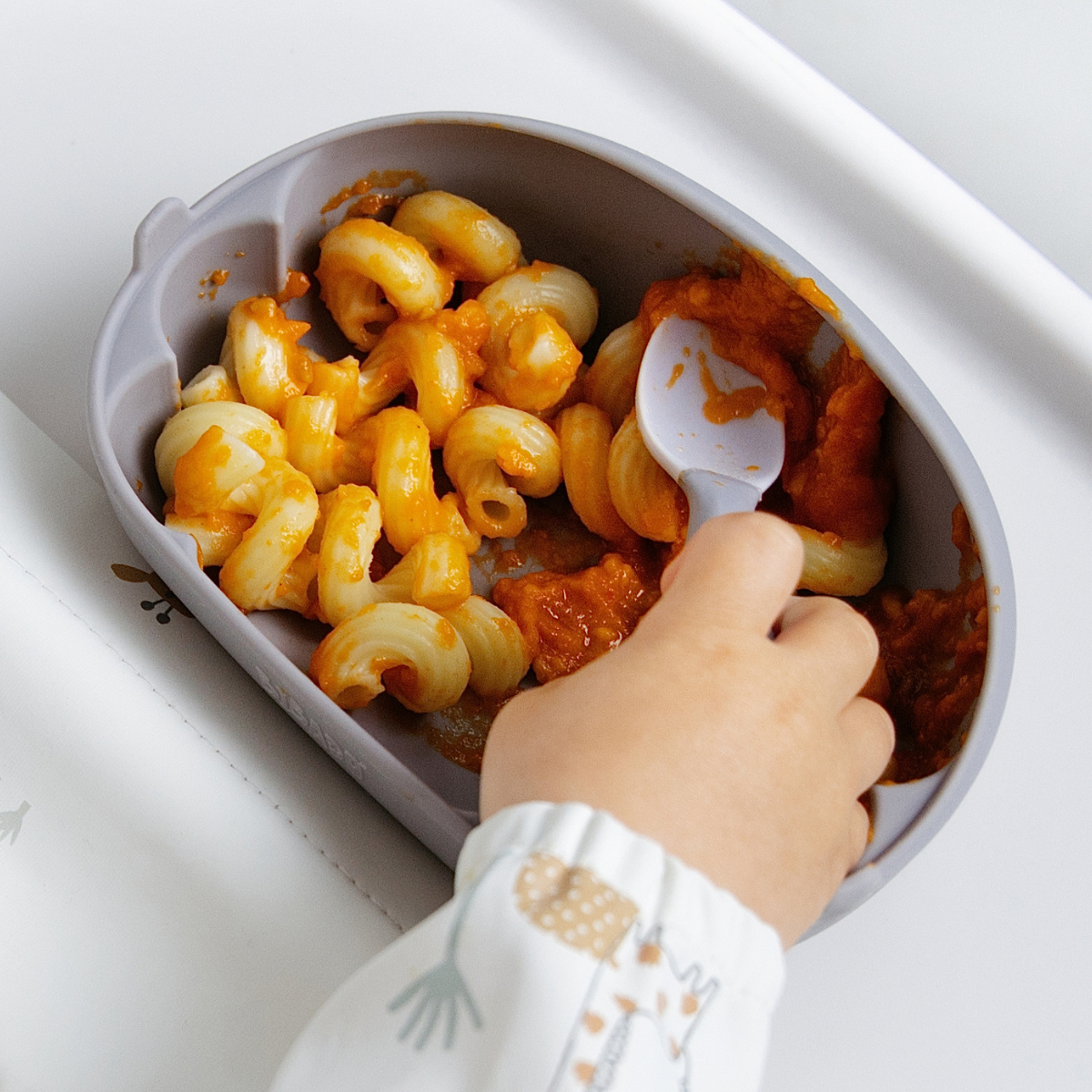
Learning to use a spoon is surprisingly complicated.
Adults barely think about it. For a baby, there’s a whole sequence to master: reach, grasp, lift, rotate, scoop, control and somehow deliver the food to their mouth without losing everything on the way.
That takes time.
Which is exactly why the Learning Curve™ Baby Silicone Suction Weaning Bowl was developed around the process of learning — rather than simply around holding porridge.
Working closely with our friend and leading paediatric dietitian Lucy Upton, we looked at where babies can struggle, where parents naturally step in and how a bowl could provide useful support without taking away the opportunity to learn.
Weaning advice can sometimes make feeding feel rather binary.
Either the adult feeds the baby, or the baby feeds themselves.
Real family mealtimes tend to sit somewhere much more useful in the middle.
You might load a spoon, turn it so it’s easier to grasp and then let your baby do the rest.
You might demonstrate a movement before handing the utensil back.
You might give more help one day and discover they can suddenly do far more for themselves the next.
That carefully judged support is part of learning.
The goal is simply to give babies as much of the task as they are ready to manage.
One of the details we love most about the Learning Curve™ Bowl is also one of the simplest: integrated utensil rests.
Before your baby has mastered scooping, you can preload their spoon and leave it conveniently within reach.
They still need to see it, reach for it, grasp it, lift it, orient it and bring it towards their mouth.
So although you’ve helped with one part of the task, there’s still an enormous amount of learning left for them to do.
And when they’re ready to take on the scooping too, the bowl is designed to support that next step.
A completely smooth bowl can send food travelling around the edge just when your baby is trying their hardest to scoop it.
Cue more chasing. More misses. And potentially a little less enthusiasm for trying again.
Learning Curve’s scalloped curves create natural catch points around the bowl, giving the utensil useful surfaces to work against.
And because babies don’t approach their bowl from exactly the same angle every time, those support points are positioned around the bowl rather than in one predetermined spot.
Right hand today. Left hand tomorrow. Spoon pointing sideways. Wrist at an angle nobody over the age of three would dream of using.
That’s learning.
The bowl should adapt to it.
Nobody learns well if every attempt ends in frustration.
That doesn’t mean we should make everything effortless for babies. Some challenge is exactly what gives them the opportunity to develop.
But carefully designed support can help turn more attempts into useful practice.
When a baby manages to pick up that spoon or successfully scoop some yoghurt, the reward is immediate: something happens.
That feedback makes the activity worth repeating.
Try. Succeed. Repeat.
Try. Miss. Adjust. Repeat again.
That is how skills grow.
At the table, babies are continually refining how their hands and bodies work.
Picking up and manipulating a spoon asks them to practise grip, rotation, wrist control, hand-eye coordination and fine motor movement.
These are not isolated “weaning skills”. They are part of the wider process of gaining increasingly precise control over their hands.
The bowl isn’t teaching them to fasten a button or hold a pencil.
But the baby practising all those controlled hand movements today is building an ever-expanding library of movement and experience.
That’s one reason we see weaning as developmental dining.
Food may be the reason they came to the table.
Learning is happening alongside it.
The Learning Curve™ Bowl is suitable from the start of weaning and works whether you’re following baby-led weaning, spoon-feeding or — like many families — combining the two.
Use it with preloaded spoons while your baby is learning the reach-to-mouth movement.
Let the scalloped edges help as they begin attempting their own scoops.
And allow them to take over more and more of the process as their skills grow.
Good assistance should always be heading in one direction:
towards needing less assistance.
Babies can begin interacting with spoons from the start of weaning. At first, a parent may preload the spoon before allowing the baby to pick it up and bring it to their mouth. Independent scooping develops gradually with practice.
A stable suction bowl can make early self-feeding easier to practise because the bowl stays in place while babies reach, push and scoop.
They provide a useful place to leave preloaded cutlery within your baby's reach. This allows you to help with loading while still giving your baby responsibility for reaching, grasping, lifting and self-feeding.
Yes. It can be used for baby-led weaning, parent-assisted feeding or a combination of both and is designed to support increasing independence as your baby's skills develop.
Shop the Learning Curve™ Baby Silicone Suction Weaning Bowl
Discover more Learning Curve™ tableware designed for little learners

Meet Big Sipper™ Open Cup Drinking for Babies & Toddlers
Why we created Big Sipper Learning to drink independently is another one of those skills adults make look deceptively simple. Pick up the cup. Bring it to your mouth. Tip it just enough. Take a sip...
Read more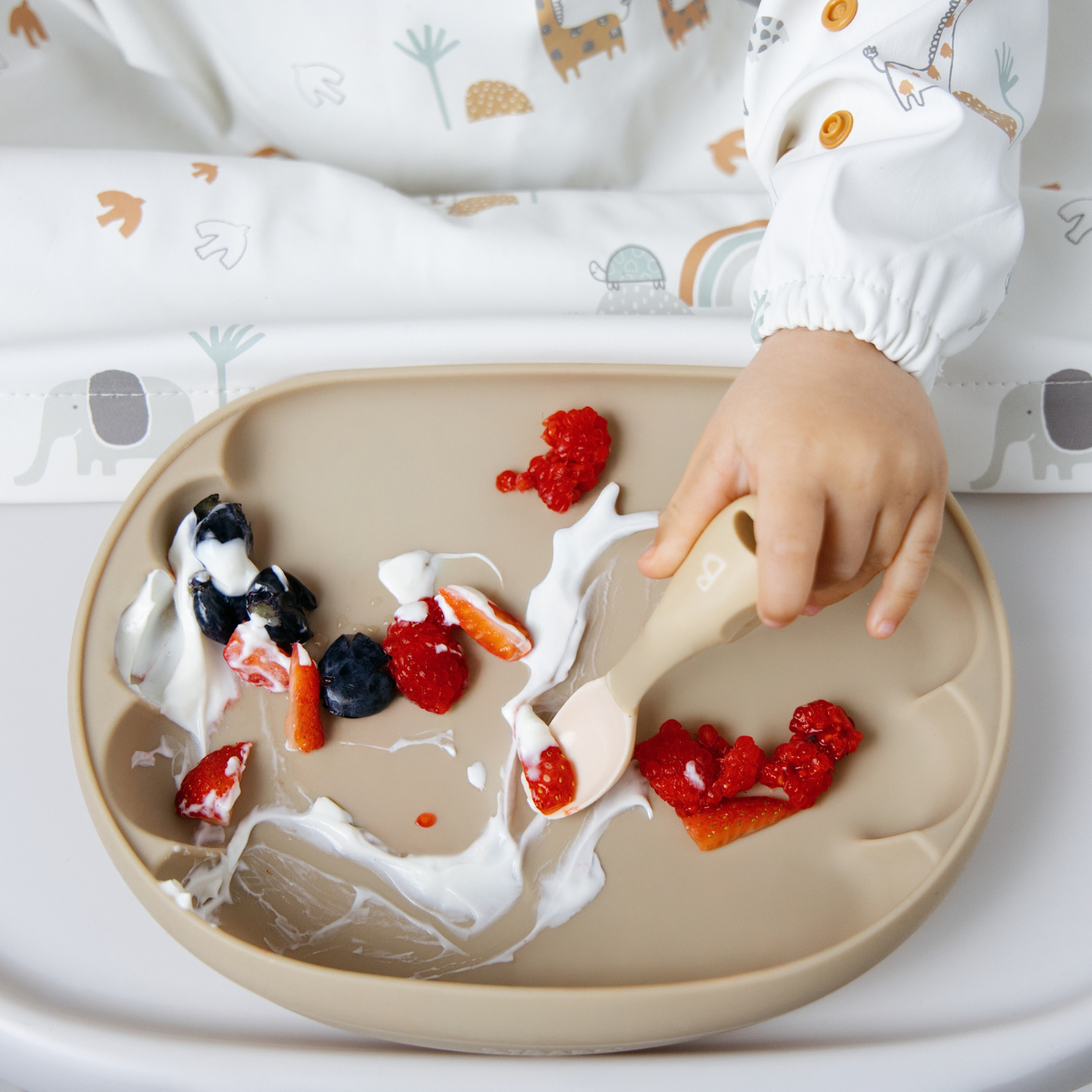
Baby Weaning Plates & Self-Feeding: Meet the Learning Curve™ Plate
More than a baby plate: tableware designed to help babies learn to eat Weaning is about far more than getting food from the plate to mouth. From around six months, mealtimes become one of the riche...
Read moreFollow us for more delicious, nutritious bite-size Bibado goodness
