Mealtime adventures are better with Bibado! Let our award-winning products make a difference to your weaning journey.
 Shop Now

BASKET
Your basket is empty
Mealtime adventures are better with Bibado! Let our award-winning products make a difference to your weaning journey.
Shop Now
How to handle heatwaves, holidays, disrupted routines and disappearing appetites — without losing your cool.
How to handle heatwaves, holidays, disrupted routines and disappearing appetites — without losing your cool.
Summer with a baby sounds idyllic in theory. Picnics. First dips in paddling pools. Family holidays. Long afternoons outside.
Then the temperature climbs, naps disappear, nobody wants to eat the dinner you lovingly prepared, and you find yourself trying to negotiate with a sweaty eight-month-old at 6 pm.
If that sounds familiar, you are very much in summer-with-a-baby territory.
We’ve had more heatwaves than hot dinners in the UK this year, so it’s worth remembering that babies and young children are particularly vulnerable to hot weather. Dehydration, sunburn and overheating are all things to be aware of — but that doesn’t mean you need to spend summer worrying. A few sensible adjustments can make hot days much easier to navigate.
And when it comes to weaning? Summer is a time for flexibility, not perfection.
Here’s your survival plan:
Before you head out, ask:
✓ Have I packed water and their usual milk feeds?
✓ Is there somewhere shady we can retreat to?
✓ Have I packed suitable sunscreen and a sun hat?
✓ Can air circulate freely around the pram? Don’t be tempted to use makeshift pram shades using thick blankets and covers.
✓ Have I packed foods that keep well in the heat?
✓ Can we move lunch, naps or plans around if baby gets tired or hot?
✓ Have I packed more bibs, wipes and spare clothes than seems remotely reasonable?
If yes, you’re doing brilliantly.Everything else can be improvised.
Hot weather increases the risk of dehydration, particularly for babies and young children, so think ‘little and often’ rather than suddenly trying to persuade them to drink a huge amount.
If your baby is weaning
Once babies have started eating solid food at around six months, the NHS recommends offering sips of water from an open cup or free-flow cup with meals. In hot weather, offer water regularly throughout the day too.
This is also a brilliant opportunity to build independent drinking skills.
Leave their cup visible and accessible at mealtimes. Model drinking yourself. Offer it frequently without turning every sip into a negotiation.
Bibado hack: Keep your Sippit topped up and within reach during meals and play. Drinking from an open cup is a developmental skill, so every little attempt counts — including the ones that end up down their front. And because you’re able to be out alfresco, you can even incorporate Sippit into messy play with water!
Breastfed babies
A fully breastfed baby under six months generally does not need additional water. In hot weather, they may simply want to breastfeed more frequently.
Formula-fed babies under six months
The NHS advises that formula-fed babies under six months may need small sips of cooled boiled water in addition to their usual milk feeds during hot weather. Their formula should still be prepared at its normal strength.
If you’re unsure about your individual baby’s needs, speak to your health visitor, pharmacist or GP.
The hydration check
Keep an eye on what is coming out as well as what is going in. Possible signs of dehydration in babies include:
Seek medical advice if you’re worried.
One of the most useful things you can do during very hot weather is lower your expectations around meals.
Adults often don’t fancy a huge roast dinner when it’s 35°C outside either.
Babies may want:
That is OK.
A couple of unusually light eating days during a heatwave do not undo months of weaning.
Instead of focusing on how much they ate, come back to the things your baby can still practise and use the exposure roadmap:
Saw it. Touched it. Squished it. Smelt it. Licked it. Tasted it. Chewed it.
Food exposure and skill-building still count even when very little gets swallowed.
This is arguably summer’s greatest weaning hack.
When nobody wants a big meal, serve small amounts of several foods instead. It’s a great way to keep introducing variety and hopefully minimise waste.
Think:
Generally speaking, routine and structure can be helpful, but it can often backfire in extreme weather or in different time zones if holidaying abroad.
Breakfast at 7 am. Lunch at midday. Dinner at 5 pm. Lovely when it works.
Not remotely compulsory for hot weather and vacays!
On very hot days, your baby may eat much better earlier in the morning or later in the afternoon when they are cooler and more comfortable.
So rather than battling through lunch because this is when we normally eat, consider:
Simple hot-day schedule
Early morning: breakfast + water
Mid-morning: small snack or mini meal
Hottest part of the day: milk, water, rest and low-key food if wanted
Later afternoon: another mini meal
Early evening: family food if appetite returns
A routine can be reassuring, but a routine should serve your family — not the other way around.
For babies, shade is your best friend.
The NHS recommends keeping babies under six months out of direct sunlight, particularly around midday. Older babies and children should also spend time in the shade when the sun is strongest, typically between 11 am and 3 pm.
That might mean:
This one matters.
Never cover a pram, buggy or travel system with a thick blanket, muslin, cloth or non-breathable cover in an attempt to create shade.
Even if there is a gap at the side, covering the pram can reduce airflow, trap heat and make it much harder for you to see whether your baby is becoming too hot.
The Lullaby Trust specifically advises against covers that prevent air circulating and recommends a clip-on sunshade or parasol instead.
Alternatively, you can use a good-quality stroller or pram shade but be very selective about the brand. We’re a big fan of SnoozeShade. There are cheaper alternatives, but we know this one has been tested rigorously and has a baby-safe coating to screen out 99% of harmful UV. It also has a special air-permeable mesh to allow circulation.
DO
✓ Use the pram’s built-in hood appropriately
✓ Use a parasol or purpose-designed breathable sunshade
✓ Keep air circulating
✓ Regularly check your baby
✓ Move into proper shade whenever possible
DON’T
✗ Drape a thick blanket across the pram
✗ Completely cover the opening
✗ Assume a sleeping baby is comfortable because they aren’t complaining
✗ Leave the pram sitting in direct sun
Sun protection works best as a combination of ‘shade + clothing + hat + sunscreen ', rather than sunscreen doing all the work.
For babies and children over 6 months, NHS advice recommends choosing a broad spectrum sunscreen with:
- at least SPF30
- at least four-star UVA protection, or the UVA symbol inside a circle
It should be applied generously and reapplied regularly, particularly after swimming, sweating or being rubbed off.
Babies under six months should be kept out of strong direct sunlight as sunscreen is not recommended under the age of 6 months.
The parent hack
Keep a sunscreen in your changing bag, so you always have it to hand.
Applying it before everybody gets hot, hungry and desperate to leave the house is considerably easier than wrestling a wriggly baby beside the car.
In hot weather, babies don't need unnecessary layers.
Loose, lightweight clothing can help keep them comfortable, and hats are essential when outside in the sun. Look for 100% cotton and linen garments that are naturally more cooling for hot weather.
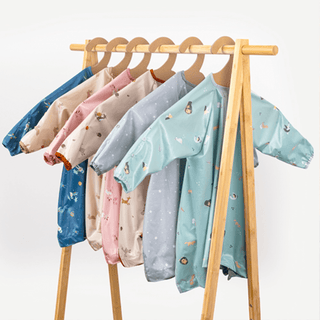
Mealtimes can still get spectacularly messy. If you’re eating alfresco at home, you can strip down completely, but we’ve thought of everything, so there’s even a short-sleeve version of the Coverall Bib.
You don’t need a special “heatwave diet”. But naturally cool, refreshing foods can be particularly appealing when appetites dip.
Fruits
Veg
Other options
Prepare everything appropriately for your baby’s developmental stage and usual eating abilities.
And remember: water-rich foods can complement hydration, but they don’t replace regular drinks.
The freezer is one of your most useful pieces of summer baby equipment.
Freeze:
Then you can pull out exactly what you need without turning the kitchen into a furnace.
Heat, light evenings, travel and unfamiliar rooms can all disrupt sleep.
Sometimes the best approach is simply to stop expecting a normal day.
Try:
✓ Closing blinds or curtains during the day to reduce heat entering the room
✓ Ventilating when the outside temperature becomes cooler
✓ Using lightweight sleepwear appropriate for the room temperature
✓ Keeping bedtime familiar even if timing changes
✓ Allowing extra wind-down time after stimulating holiday days
The Met Office recommends keeping living spaces cool by blocking direct sunlight during the day and ventilating when temperatures fall.
The Lullaby Trust advises checking a baby’s temperature by feeling their chest or the back of their neck rather than their hands and feet. If they feel sweaty or clammy, they may be too hot.
And remember: one strange nap day is just one strange nap day. You haven't permanently destroyed their routine.
Different highchair. Different supermarket. Different smells. Different timezone.
Holidays bring a lot of novelty, so give yourself permission to keep food simple. Milk feeds will still be doing the heavy lifting in terms of nutrition, so as long as you have access to veggies and fruits, you’ll be ok. Being abroad may even offer the opportunity to broaden tastes with new foods less readily available at home
You do not need to pack your entire kitchen, and you certainly do not need to spend your holiday recreating elaborate meals your baby normally has at home.
The main things you need to be aware of are differences in water safety - for food prep and drinking. You might need to consider using bottled or boiled water to mix formula, wash fruits, and clean feeding gear.
If you’ve safely introduced allergens, there’s no reason to not continue the maintenance of them. Depending on where you’re holidaying or if you’re nervous, you might want to consider pausing any new allergens - purely down to language barriers and medical provisions if your little one does have an allergic reaction.
The best advice is to check any specific safety requirements for your holiday destination to make sure you’re prepped before you leave.
Remember, it’s a holiday - you can slot right back into your routine once you’re home.
Keep one small bag packed so that leaving the house doesn’t become a military operation.
Your grab-and-go weaning kit
✓ Bib
✓ Spoon or cutlery
✓ Open cup
✓ Water
✓ Wipes
✓ Spare outfit
✓ Wet bag
✓ Sunscreen
✓ Sun hat
✓ Cool bag and ice packs to keep food chilled
Picnics and outdoor eating are brilliant, but hot weather makes good food hygiene particularly important.
Keep foods that would normally live in the fridge properly chilled until you are ready to eat them.
A cool bag with ice packs is useful for foods such as:
If something has been sitting warm in the sun for a long time and you’re unsure whether it’s safe, don't take the chance.
The summer survival mantra applies here too:
‘When in doubt, simplify.’
Bread, banana and avocado can still make a perfectly respectable emergency lunch.
Here is your action plan.
Step 1: Check comfort
Are they hot?
Tired?
Thirsty?
Overstimulated?
Address that first.
Step 2: Offer water or their usual milk
Hydration may be more appealing than food.
Step 3: Make the meal smaller
A huge plate can feel like hard work.
Opt for tiny-tapas style picky lunches and plates.
Step 4: Offer something cool and familiar
Fruit, yoghurt or another trusted food may restart interest.
Step 5: Eat with them
Sometimes watching you eat is all the encouragement they need.
Step 6: Stop if they’ve had enough
Don't chase them around with a spoon. You can offer food again later.
Your responsibility is to provide the opportunity. Their job is to decide whether — and how much — they want to eat.
Most summer disruption is exactly that: disruption. But it’s useful to know when to seek help.
Signs of heat exhaustion can include tiredness, dizziness, nausea or vomiting, heavy sweating, cramps, a high temperature, excessive thirst and irritability. If your baby appears affected, move them somewhere cool, remove unnecessary clothing, offer appropriate fluids and cool their skin.
If they remain unwell after around 30 minutes of cooling, or you need advice, NHS guidance recommends contacting 111.
Heatstroke is a medical emergency. Warning signs include a very high temperature, hot skin without sweating, fast breathing, confusion, seizures or loss of consciousness. Call 999 if you suspect heatstroke.
You know your baby. If something doesn’t feel right, seek medical advice.
If the forecast suddenly says 30°C tomorrow, you do not need to overhaul your entire life. Instead, do this:
TONIGHT
✓ Chill water
✓ Freeze ice packs
✓ Check sunscreen
✓ Put sun hats by the door
✓ Prepare one easy breakfast
✓ Put the pram parasol or sunshade somewhere obvious
✓ Close blinds in rooms that get morning sun
TOMORROW MORNING
✓ Get outside early if you want fresh air
✓ Offer breakfast before the temperature climbs
✓ Encourage water alongside food
✓ Apply sunscreen before leaving
11AM–3PM
✓ Seek shade or stay indoors where it is cooler
✓ Offer drinks frequently
✓ Keep meals simple
✓ Don’t worry if appetite dips
✓ Prioritise rest
LATE AFTERNOON
✓ Try another little meal
✓ Get outside when temperatures ease
✓ Offer water again
✓ Reset rather than trying to “catch up”
BEDTIME
✓ Cool the room as much as reasonably possible. According to NHS and The Lullaby Trust guidelines, a baby's bedroom should ideally be kept at a temperature between 16°C and 20°C (61°F to 68°F).
✓ Dress baby appropriately for the room temperature
✓ Check their chest or back of neck if you're unsure whether they're too hot
✓ Accept that bedtime may not go exactly to plan
If you remember nothing else, remember these:
Hydration before perfection.
Shade before schedules.
Small meals still count.
Food exploration still counts even when very little gets eaten.
Never cover a pram with something that restricts airflow.
Move meals rather than fighting through them.
Manage the mess rather than limiting the experience.
One disrupted day will not derail your weaning journey.
Remember, milk feeds up to the age of 12 months are the primary source of nutrition.
And perhaps most importantly:
Lower your expectations. Summer with a baby isn't supposed to run like a military timetable.
Some days everything will go perfectly to plan, while some days lunch will be half an avocado and two strawberries.
Keep offering. Keep hydrating. Keep giving them opportunities to explore. And keep your cool.
You’re still moving forward — even when summer makes everything feel slightly more chaotic.
The Weaning Parent’s Constipation Survival Guide
Constipation is incredibly common in childhood. In fact, children’s bowel and bladder charity ERIC reports that it affects up to 1 in 3 children, and babies can be affected too. The good news? For ...
Read more
Don’t Like It – Or Don’t Know It Yet?
One of the most common mistakes we can make during weaning is assuming that a baby’s first reaction to a food tells us whether they like it or not. A screwed-up face, a head turn, a spoon pushed aw...
Read moreFollow us for more delicious, nutritious bite-size Bibado goodness
