Mealtime adventures are better with Bibado! Let our award-winning products make a difference to your weaning journey.
 Shop Now
BASKET
Your basket is empty
Mealtime adventures are better with Bibado! Let our award-winning products make a difference to your weaning journey.
Shop Now
Food throwing can feel frustrating, especially when it happens again and again. But the good news is that it's extremely common during weaning. In fact, it’s often a normal, and even encouraged, part of your baby’s development.
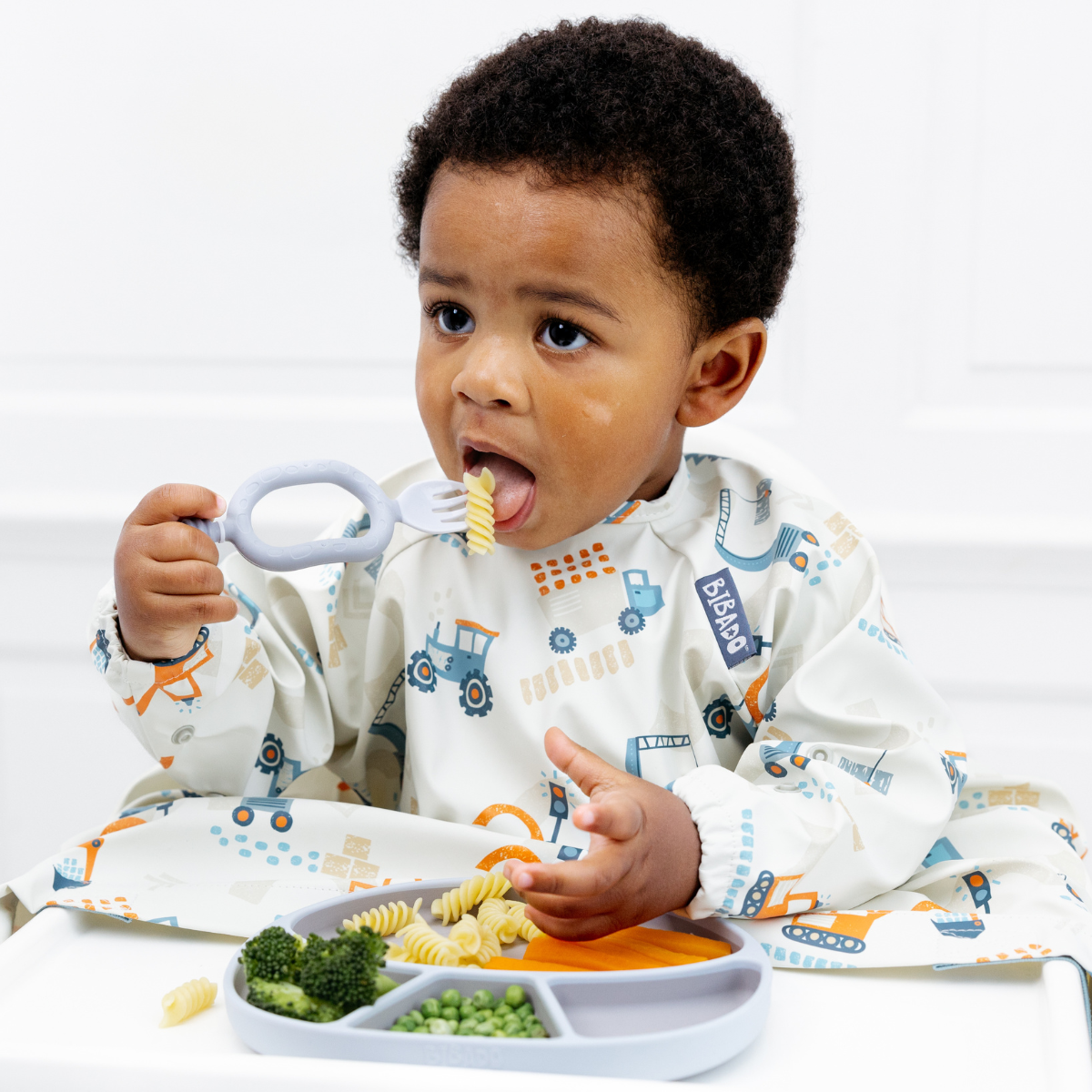
If you and your little one have set sail on your weaning journey, you’ve probably all-too familiar with putting food on the highchair tray, only for it to be on the floor seconds later.
It can feel frustrating, especially when it happens again and again. But the good news is that food throwing during weaning is extremely common. In fact, it’s often a normal, and even encouraged, part of your baby’s development.
Understanding why babies throw food can help take some of the stress out of mealtimes. for you and baby both:
Around 6–12 months, babies are fascinated by how the world works. Dropping food from their highchair helps them discover cause and effect.
Repeating the action helps them understand that their behaviour creates a reaction. While it might look like mischief, it’s actually an important learning process.
During weaning, babies learn about food using all of their senses, not just taste.
Every mealtime is a full sensory lesson: When babies touch, squish, smell, and taste food, they’re building neural connections that support memory, problem-solving, and understanding cause and effect (“if I squeeze this, it changes shape”). Exploring different textures, colours, and temperatures helps their brain categorise and make sense of the world.
Although it can be messy, this hands-on experience is an important part of learning to eat.
Sometimes food throwing is your baby’s way of saying "I'm finished!".
Because babies can’t yet say “I’m full,” they often show it through behaviour. Dropping or throwing food repeatedly, turning their head away or pushing food aside can all be signs that they’ve had enough.
If this happens toward the end of a meal, it may simply be a signal that mealtime is over.
Babies quickly learn that throwing food gets a reaction. If dropping food makes someone laugh, talk or quickly pick it up, they may repeat the behaviour to see what happens again.
Hard as it may sometimes be, try to stay calm and avoid big reactions to help stop the behaviour from becoming a game.
While it’s a normal phase, there are a few ways to reduce food ending up on the floor.
Putting just a few pieces of food on the tray at a time can limit the amount that gets thrown - this can also prevent your baby from becoming overwhelmed.
If throwing starts toward the end of meals, it may be a cue that they’re finished.
Avoid strong reactions that may encourage the behaviour.
Even though food throwing is a normal part of learning, it doesn’t mean the clean-up has to be overwhelming.
Using a full-coverage weaning bib that attaches to the highchair can help catch much of the dropped food before it reaches the floor. Designs like the Bibado Coverall Bib create a catchment area between your baby and the tray, helping keep clothes cleaner and reducing the mess around the highchair.
Food throwing is a common part of baby-led weaning and usually reflects curiosity, learning and growing independence. With patience and consistency, most babies move through this phase as they develop better coordination and understanding at mealtimes.
For parents, it can be frustrating, but persistence is key. Sticking with it supports your child’s overall development, helping them build confidence, coordination, independence, and a range of early life skills. Those tricky moments are all part of the learning process, not setbacks, and contribute to their long-term cognitive development.

Gut Health in Weaning: Why It Matters More Than You Think
From Bibado's Founder, Dan: Gut health is something we often don’t think about when we start weaning, and usually only becomes a focus when problems arise. That’s certainly how things unfolded in o...
Read more
Common Baby-Led Weaning Myths (And What Actually Matters)
Baby-led weaning (BLW) is a great way for babies to start eating solid foods and kickstarting their sensory development, but it’s also surrounded by a number of myths and misconceptions. Separating...
Read moreFollow us for more delicious, nutritious bite-size Bibado goodness
