Mealtime adventures are better with Bibado! Let our award-winning products make a difference to your weaning journey.
 Shop Now
BASKET
Your basket is empty
Mealtime adventures are better with Bibado! Let our award-winning products make a difference to your weaning journey.
Shop Now
Starting weaning can bring a lot of questions. From first foods and allergens to gagging, iron, textures and cups, we answer 20 of the most common baby weaning questions with practical, expert-informed advice, including guidance from our friend Lucy Upton, The Children’s Dietitian.
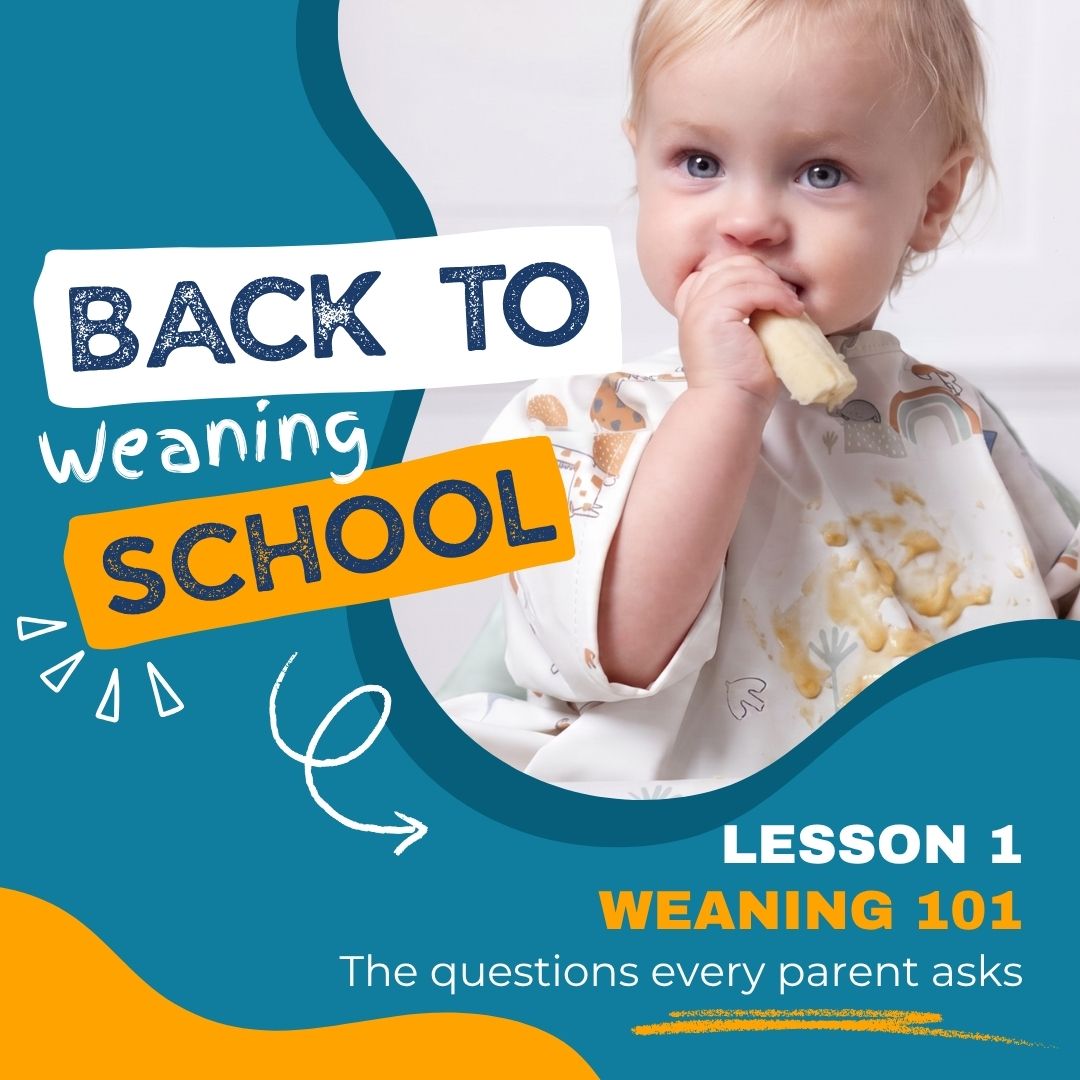
Starting solids can feel like entering a whole new world overnight.
Suddenly you’re thinking about gagging, allergens, iron, textures, portion sizes, finger foods, spoons, cups — and wondering whether the food on the floor counts for anything at all.
So, welcome to Weaning 101.
We’ve pulled together 20 of the questions parents ask most, with simple, practical answers and resources to help you feel more confident about what really matters.
Because weaning isn’t just about getting food in. It’s about all the developmental opportunities this unique and frequent task offers.
In the UK, NHS advice is to start introducing solid foods around six months, when your baby shows the developmental signs they’re ready.
You’re looking for three things together:
Things like chewing fists, waking more at night or wanting more milk can all happen around this age too, but they don’t necessarily mean your baby is ready for solids.
There’s no single “best” first food.
Soft vegetables, avocado, yoghurt, porridge, egg, soft fruit and iron-rich foods can all form part of those early tastes.
The bigger goal is variety.
Your baby is learning that food comes in all sorts of flavours, temperatures, colours and textures, so don’t feel you have to start with only sweet options or combine foods “that go together”. Remember, your baby has no preconceived ideas about food pairings.
A little broccoli alongside banana gives them a much more interesting introduction to the world of food.
You don’t have to pick a side.
Finger foods, mashed foods, purées and preloaded spoons can all sit happily alongside one another.
What matters most is that your baby gets opportunities to experience different tastes and textures and take an active role in the meal.
Think about it more in terms of: “Is my baby getting opportunities to explore, practise and participate?”
And if you do choose purées, try to progress to coarser, lumpier textures rather than staying on super-smooth purées.
READ NEXT: The importance of the texture timeline
This is the question every parent wants a number for, and there is no standard answer.
At the beginning, one baby might swallow several spoonfuls while another tastes a little, squashes the rest, and spends ten minutes investigating a piece of broccoli.
Both can be completely normal.
Offer an appropriate amount of nutritious food and let your baby decide how much they want to eat. Trust them to regulate their solids intake the same way they have with milk feeds.
Early weaning is about much more than only volume. They’re also learning how food feels, how to pick it up, how to move it around their mouth and what hunger and fullness feel like.
Remind yourself that your baby’s main source of nutrition up until 12 months is milk, so allow yourself, and your baby, the freedom to explore and experiment without getting too hung up on consumption.
If you do have concerns about weight gain and feeding, contact your GP or health visitor.
You don’t need to go from milk feeds to three beautifully balanced meals overnight.
Start gently.
For many babies, that means starting with one small meal or food opportunity a day, then gradually building towards more regular meals as their confidence and appetite develop.
By later in the first year, you’ll usually be moving towards breakfast, lunch and dinner.
But there’s no prize for getting there quickest. Weaning is progression, not a race.
In early weaning, milk is still a major source of your baby’s nutrition.
So rather than worrying too much about a rigid milk-before-food or food-before-milk rule, look for a good moment.
Ideally, your baby should be:
A baby who is furious with hunger isn’t necessarily in the best mood for learning a brand-new skill.
As food intake gradually increases, their milk pattern will naturally begin to change too.
From around six months, you can begin offering small sips of water in an open cup with meals. And the word offering is important.
At first, open cup drinking is another skill to learn. Your baby might take a sip. They might chew the rim. They might tip water down themselves. That’s all practice.
An open, free-flow cup gives them a chance to learn a different drinking pattern than sucking from a bottle or breast. It also gives the mouth a muscle workout, helping strengthen the cheeks, lips, and jaw—all of which support processing different food textures and safe swallowing.
Think of those first cups as drinking lessons rather than hydration targets.
READ NEXT: Small Sips, Big Results — a parent’s guide to open cup drinking
Yes — and understanding gagging can make a huge difference to how confident you feel at mealtimes.
Gagging is a protective reflex. It helps babies move food forward and away from their airway while they’re still learning how to control food in their mouths.
It can look dramatic, but it’s a normal part of weaning.
Your baby might cough, retch, turn red, or push their tongue forward.
Choking is different and can be silent because the airway is blocked.
Knowing the difference matters, and infant first-aid knowledge is incredibly valuable for every parent and caregiver.
READ NEXT: Gagging vs choking — what’s actually happening?
Early on, your baby will probably grab food with their whole hand rather than delicately picking it up between finger and thumb.
That means bigger pieces are often easier and safer.
Think roughly adult-finger-sized pieces of soft food with enough sticking out of your baby’s fist for them to bring to their mouth.
As their hand skills develop and they move from a palmar grasp towards a pincer grip, smaller pieces become easier to manage.
Anything cylindrical or that presents a choking risk should be quartered or squished. For example, grapes should be quartered lengthways, and blueberries and raspberries can be squished between the thumb and forefinger to make them more manageable.
READ NEXT: Serve This, Not That
Those little gums are far more capable than they look.
Babies can manage lots of appropriately soft foods without teeth because chewing involves much more than biting with incisors.
Their jaw, tongue, lips and cheeks are all learning to work together to squash food and move it around the mouth.
Every safe texture they experience helps build that oral skill set.
It’s a bit of a mouth workout — long before the molars arrive. There’s lots you can do to help them become safer, more competent eaters, like introducing a multi-sensory teether to help strengthen those mouth muscles and jaws.
READ NEXT: Magical Mouth Muscles
Common allergens such as egg, peanut, dairy, wheat, sesame, fish and soy can be introduced from around six months — and current NHS advice is sooner rather than later.
Introduce them individually and in small amounts so it’s easier to identify the cause if there is a reaction.
But there’s another part parents sometimes miss:
Once an allergen has been successfully introduced, keep offering it regularly.
Allergen introduction isn’t simply something to tick off and forget.
Introduction matters. Maintenance matters too.
READ NEXT: The Biggest Allergen Mistake Parents Make
This essential mineral plays several vital roles in your baby’s body.
It’s required for producing haemoglobin — the red blood cell protein responsible for moving oxygen throughout the system — while also supporting immune health, muscle function, and that incredible, rapidly developing brain.
The first two years are a whirlwind of growth and discovery. As their blood volume expands and their brain builds new connections at a record pace, their need for dietary iron increases significantly to keep up with all those developmental milestones.
At around six months, your baby’s need for dietary iron becomes increasingly important — and it’s exactly the time when the stores they are born with start to deplete.
Try to include iron-rich foods regularly, such as:
And there’s one particularly useful trick to remember.
When you’re serving plant-based, non-haem sources of iron, pair them with vitamin C to help your baby absorb more.
Think lentils with tomato, hummus with pepper or porridge with berries.
READ NEXT: The Simple Iron Hack Every Parent Should Know
Thankfully, the avoid list is much shorter than the list of foods they can enjoy.
A few important ones:
And remember that sometimes it’s not the food itself that’s the problem — it’s how it’s prepared.
Grapes, cherry tomatoes and other firm, round foods, for example, need to be served safely.
READ NEXT: Serve This, Not That
Then they’re eating the way the experts recommend and probably learning quite a lot.
To us, it might look like:
Squish. Smear. Throw.
To your baby, it can be:
Touching food can help babies become familiar with unfamiliar textures before they’re ready to eat them.
So yes, sometimes the broccoli in their hair really is part of the lesson.
READ NEXT: Why Mess Matters at Mealtimes
Because babies are fascinated by cause and effect.
And, inconveniently for parents, gravity is extremely reliable.
But dropping also involves crucial motor skills, and it’s a great way to practise them on repeat.
Your baby is learning how to:
Sometimes it’s accidental. Sometimes it’s deliberate.
And sometimes they’re conducting experiment number 47 to check whether the spoon still hits the floor.
Spoiler: it does.
You can introduce utensils right from the get-go, and it’s a really good idea.
It helps build familiarity and gets your baby used to the idea and their role at mealtimes. That does not mean they’ll be scooping yoghurt with great precision at six months.
Handing your baby a preloaded spoon gives them an opportunity to practise.
Like most things in weaning, early and repeated exposure offers opportunities to skill-build. We’re looking for that repetition and practice to foster early success and to keep mealtime explorers engaged, interested and locked in for learning.
That’s one reason Handi Cutlery really helps. By attaching cutlery to the bib, it minimises frustration and keeps cutlery close by for easy retries.
READ NEXT: From Fingers to Fork — a parent’s guide to introducing utensils
Not necessarily.
Sometimes “I don’t like it” actually means:
“I don’t know it yet.”
Babies can need repeated exposure to an unfamiliar food before it begins to feel familiar.
And exposure doesn’t only mean swallowing it.
Seeing it counts. Touching it counts. Smelling it counts. Licking it counts. Tasting it counts.
Take the pressure off and keep offering variety.
Learning to like food can be a process, not an instant reaction.
READ NEXT: Don’t Know It Yet or Don’t Like It?
Especially at the beginning, try not to judge the meal only by what gets swallowed.
Your baby may have spent that mealtime practising reaching, grasping, biting, tongue movement, chewing, cup drinking or coping with an unfamiliar texture.
Those are all stepping stones towards eating.
Progress doesn’t always look like an empty bowl.
If your baby is persistently struggling to manage textures, coughing or choking frequently, finding eating uncomfortable, losing weight, or you have concerns about their feeding or development, speak to your health visitor, GP or an appropriate feeding professional.
In a nutshell, yes.
Learning to eat involves an enormous amount of sensory information.
Food can be wet, cold, sticky, rough, slippery, grainy or squishy — and your baby has to make sense of all of it.
Allowing safe exploration helps them get familiar with those sensations before they’re expected to eat them confidently.
So rather than trying to eliminate mess, manage it so you can allow the learning.
That’s one of the principles Bibado was built around.
Manage the mess. Protect the learning.
READ NEXT: Is Mess Important for Baby Development?
Forget the immaculate Instagram plate and comparison to other families.
Check in against this simple list, and if you’re mostly answering yes, you’re doing a great job.
If the answer to those questions is broadly yes, you’re doing far more than simply getting food into a tummy.
You’re helping your baby learn how to eat.
And like every other skill they’ll master, that takes time, repetition, opportunity and plenty of practice.
At Bibado, we’ve always believed that mealtimes aren’t simply about what gets eaten.
They’re where babies practise skills they’ll use again and again: reaching, grasping, biting, chewing, swallowing, coordinating, problem-solving and eventually feeding themselves independently.
There will be brilliant meals.
There will be meals where almost nothing gets swallowed.
And there will almost certainly be food on the floor.
They all count.
Because every meal is another opportunity to learn.
CONTINUE BACK TO WEANING SCHOOL: Lesson 2: Mealtime Skills — How Babies Learn to Eat | Lesson 3: 10 Baby Weaning Myths Busted

The Biggest Allergen Mistake Parents Make
When it comes to allergens, most of us are so focused on getting the introductions safely out of the way that we forget something equally important: keeping them in. Introducing allergens can be on...
Read more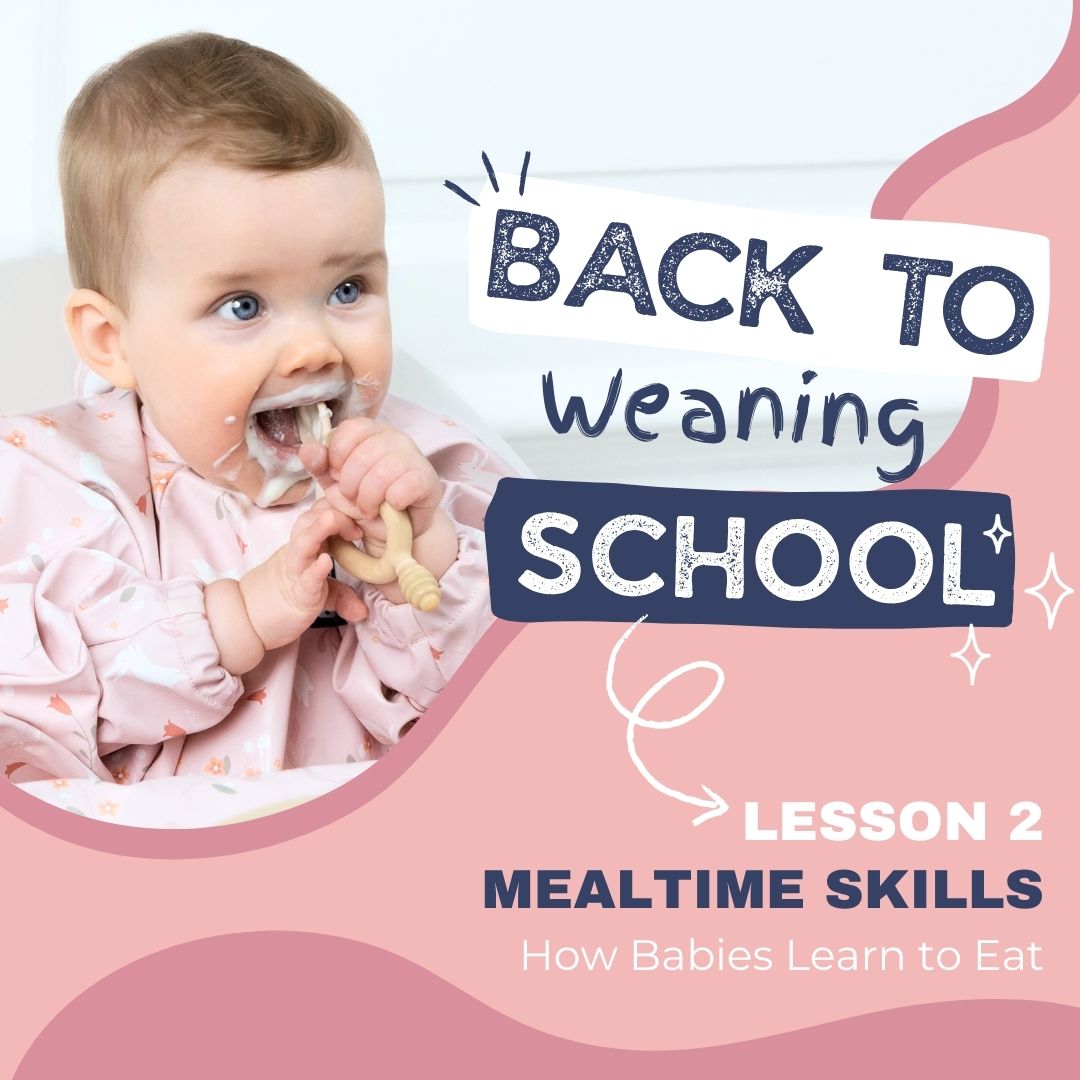
Mealtime Skills: How Babies Learn To Eat
In Lesson 1 of our Back to Weaning School series, Weaning 101, we answered 20 of the questions parents ask most about starting solids. Now it’s time for Lesson 2 — and a closer look at what’s actua...
Read moreFollow us for more delicious, nutritious bite-size Bibado goodness
