Mealtime adventures are better with Bibado! Let our award-winning products make a difference to your weaning journey.
 Shop Now
BASKET
Your basket is empty
Mealtime adventures are better with Bibado! Let our award-winning products make a difference to your weaning journey.
Shop Now
Starting solids seems to come with an extraordinary number of rules.
Start with purées. Never use purées. Let them feed themselves. Don’t let them play with their food. Finish the bowl. Avoid allergens. Introduce allergens. And whatever you do, apparently don’t get it wrong.
No wonder weaning can feel confusing.
In Lesson 1 of our Back to Weaning School series, Baby Weaning 101, we answered 20 of the questions parents ask most about starting solids.
In Lesson 2, Mealtime Skills Class, we looked at something that’s often missed: babies aren’t simply eating at the table. They’re learning how to eat.
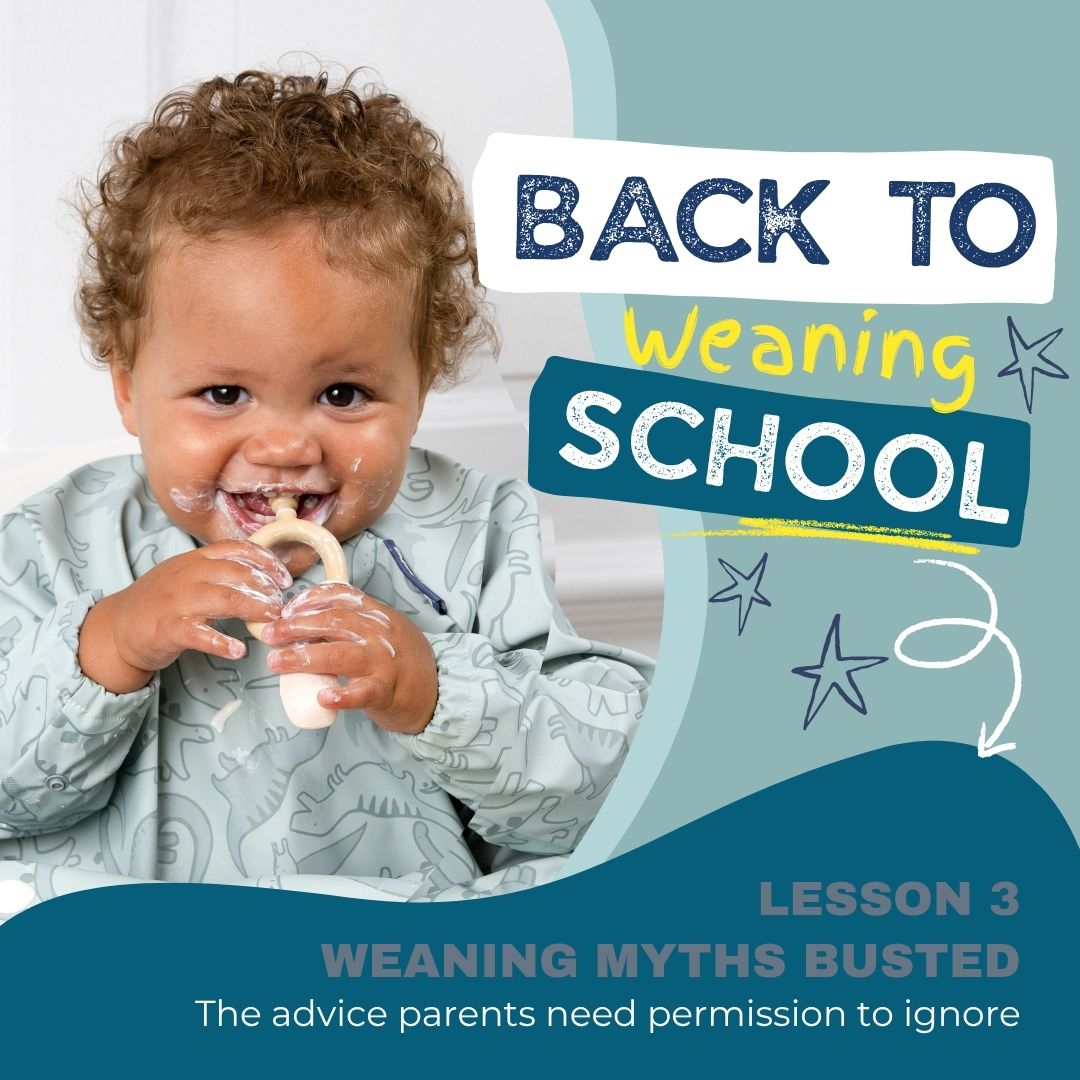
Now, for our final lesson, it’s time to question the rulebook.
Because while some weaning advice really does matter — particularly when it comes to safety — plenty of the things parents worry about are not rules at all.
Here are 10 common baby weaning myths you can give yourself permission to leave behind.
No. You absolutely can start with purées. But you don’t have to.
NHS guidance recommends starting solids from around six months, when your baby shows the developmental signs that they’re ready. At this stage, many babies are able to manage mashed foods, lumpier textures and appropriately prepared finger foods as well as smoother foods.
Some babies will prefer smoother textures at first. Others will happily grab a soft broccoli floret, strip of omelette or piece of ripe pear.
Neither baby is doing weaning “better”.
What matters is that, as your baby develops, they get opportunities to experience different tastes and textures and practise the increasingly complicated business of biting, chewing and moving food around their mouth.
If you do start smooth, try to keep moving forwards as your baby is ready.
Because texture isn’t simply something your baby eats. It’s something they learn to manage.
MYTH BUSTED: Babies don’t have to work through a set sequence of completely smooth purées before they can try other textures.
READ NEXT: Mealtime Adventures in Taste and Texture
No. You can do either, or combine the two.
Baby-led weaning versus spoon-feeding can sometimes sound like one of parenting’s great dividing lines.
In reality, an awful lot of babies happily exist somewhere in the middle.
The NHS says there is no single right or wrong approach. Some families choose baby-led weaning, some prefer spoon-feeding, and many combine the two.
That might mean porridge from a spoon at breakfast, finger foods at lunch and a loaded spoon your baby grabs for themselves at dinner.
What matters more than the label is participation.
Is your baby experiencing different tastes and textures? Are they getting opportunities to touch and explore food? Can they practise bringing food or utensils towards their own mouth? Are they gradually becoming more involved in feeding themselves?
If the answer is yes, you don’t need to worry about whether you’re following one particular method perfectly.
MYTH BUSTED: You don’t have to pick a weaning team and stick to it.
No — and learning the difference is very important.
Gagging is a normal protective reflex and is particularly common while babies are learning to manage solid food.
It can look dramatic.
Your baby may retch, cough, push their tongue forward, bring food back towards the front of their mouth or even be sick.
Gagging is generally noisy.
Choking is different. It happens when the airway becomes blocked, and a choking baby may be unable to breathe or make a sound.
Understanding that distinction can make a huge difference to confidence at mealtimes.
It doesn’t mean choking risk can be ignored. Food should always be prepared appropriately for your baby’s age and stage, and babies should be sitting securely upright and supervised while eating.
But a gag doesn’t automatically mean that something has gone wrong.
Your baby is learning how much food they can manage, where it is in their mouth and how to move it around safely.
MYTH BUSTED: Gagging can be a normal part of learning to eat. It is not the same as choking.
READ NEXT: Before You Panic: Gagging vs Choking Explained
Not necessarily. This is an easy one to fall for.
Suddenly your previously settled baby is waking more often. They want another milk feed. They’re chewing their fists. And many well-meaning relatives will tell you that these are signs they are ready for food.
Not according to the NHS, or the many expert paediatric dietitians we speak to.
Waking more at night, wanting extra milk and chewing fists are all normal baby behaviours and aren’t reliable signs that your baby is ready for solids.
Starting weaning won’t necessarily help them sleep through either.
Instead, look for the developmental signs of readiness appearing together from around six months: being able to stay sitting with a steady head, coordinate eyes, hands and mouth to bring food towards themselves, and swallow food rather than automatically pushing it back out.
MYTH BUSTED: A sudden run of bad nights isn’t a reason to bring forward weaning.
Not necessarily.
Imagine trying something completely unfamiliar for the first time.
New smell. New temperature. New texture. New flavour.
You might need a moment too.
Babies can also pull some truly spectacular faces when they try new foods — but a grimace isn’t necessarily a restaurant review.
The NHS says it can take 10 attempts or more for a baby to become familiar with new foods, flavours and textures.
And exposure doesn’t only mean swallowing a whole portion.
Bibado's handy weaning chart roadmap reminds you to consider all the ways your weaning baby can be exposed to a food.
Seeing, touching, squashing, smelling, licking, and even putting it in their mouth and spitting it back out.
They all count as an exposure. They still learnt something about that food.
So broccoli rejected today doesn’t have to disappear from the menu forever.
Take the pressure off and try it again another time.
Sometimes “I don’t like it” actually means:
“I don’t know it yet.”
MYTH BUSTED: One refusal isn’t enough to decide your baby dislikes a food.
READ NEXT: Don’t Like It — Or Don’t Know It Yet?
No.
Just one more spoonful.
Finish that, and you’re done.
You’ve hardly eaten anything.
They’re phrases many of us grew up hearing, so it’s understandable that they can creep into mealtimes with our own children too.
But babies’ appetites vary.
They may eat enthusiastically at one meal and barely touch the next.
Growth, tiredness, teething, illness, milk intake and simply how hungry they happen to be can all affect appetite.
Rather than measuring success by an empty bowl, NHS guidance recommends following your baby’s hunger and fullness cues.
A baby who has had enough might close their mouth, turn their head away or simply lose interest.
You provide the appropriate food and the opportunity to eat.
Let your baby have some say over how much of it they need.
And try to zoom out. One small meal is just one small meal.
MYTH BUSTED: An empty plate is not the definition of a successful mealtime.
Usually, no.
Squeezing yoghurt through their fingers. Smearing avocado across the tray.
Turning a piece of pasta over six times before licking it.
To an adult, it can look suspiciously like somebody isn’t taking lunch seriously.
To a baby, it can be exploration.
Food is an extraordinary sensory experience.
It can be cold, warm, slippery, sticky, wet, rough, smooth, firm, squishy, crumbly or springy.
Your baby isn’t born knowing any of that.
They learn by experiencing it.
Touching, holding, squashing and exploring food also gives babies opportunities to practise reaching, grasping, grip control and self-feeding.
Before they can confidently eat an unfamiliar food, they may need to get to know it first.
That doesn’t mean every meal needs to become a food-flinging free-for-all.
But exploration and mess aren’t necessarily problems to fix.
Almost always, the mess is the lesson.
It’s why at Bibado, we talk about managing the mess rather than removing the opportunity.
MYTH BUSTED: Playing with food can be part of learning how to eat.
READ NEXT: Why Mess Matters at Mealtimes
For most babies, no.
This is one area where advice has changed significantly over time, so it isn’t surprising that parents sometimes hear conflicting messages.
Current NHS advice is that foods which can trigger allergic reactions — including egg, peanut, dairy, wheat, sesame, fish and soya — can be introduced from around six months.
Introduce them one at a time and in small amounts so that, if there is a reaction, it is easier to identify the cause.
But there’s another really important part.
Once an allergenic food has been successfully introduced and tolerated, keep offering it as part of your baby’s usual diet.
Introducing it once and ticking it off the list isn’t the goal.
For peanut and egg specifically, evidence reviewed by the Scientific Advisory Committee on Nutrition found that deliberately delaying introduction beyond 6 to 12 months may increase the risk of allergy.
If your baby already has a diagnosed food allergy or eczema, or you have concerns about their individual allergy risk, speak to your GP, health visitor or another appropriate healthcare professional before introduction.
MYTH BUSTED: Keeping allergenic foods off the menu for as long as possible is not the current advice for most babies.
READ NEXT: The Biggest Allergen Mistake Parents Make
This is one of the oldest in the book, and it's a dangerous oversimplification.
Breast milk or first infant formula remains extremely important throughout your baby’s first year and should continue to be their main source of nutrition until 12 months.
And when weaning first begins, plenty of food will be investigated rather than swallowed.
But food is not irrelevant before one. And though it shouldn't be the main source of nutrition, it does play an important role nutritionally.
Starting solids begins from around six months because this is the stage when babies begin to need foods alongside milk.
It’s also why UK guidance recommends including a variety of nutritious foods, including iron-containing foods, from around this age - particularly as this is exactly the time that the iron stores your baby is born with begin to deplete.
So those early meals are doing more than one job.
Your baby is learning how to eat — reaching, grasping, biting, chewing, swallowing, drinking and eventually using utensils.
They’re learning about food — tastes, smells, temperatures and textures.
And gradually, food is making an increasingly important contribution to what they eat too.
You don’t need to panic about how many spoonfuls disappear at every meal.
But neither do you need to dismiss food as “just for fun”.
MYTH BUSTED: Food before one is for learning, exploring and nutrition.
READ NEXT: The Simple Iron Hack Every Parent Should Know
No.
If your baby’s first ever breakfast consists of one lick of avocado followed by 20 minutes enthusiastically chewing the spoon, you’re doing fine.
You do not need to go from six milk feeds and no solids to breakfast, lunch and dinner overnight.
At around six months, NHS guidance says your baby only needs a small amount of solid food once a day to begin with.
Then you build gradually.
As weaning progresses, the amount and variety of food increases and babies begin moving towards a more established pattern of meals alongside their milk feeds.
The important word is gradually, and your baby will be pretty good at giving you the cues as to how much more they're ready to take.
Early weaning is about creating manageable opportunities to experience food and practise new skills.
It isn’t about suddenly running a tiny restaurant three times a day.
There is plenty of time for routines to develop.
MYTH BUSTED: You don’t need three beautifully balanced, Instagram-worthy meals from Day One.
Definitely not. Some weaning guidance exists for very good reasons.
The useful skill is learning to separate evidence-based safety advice from old habits, personal opinions and the well-meaning “you really should…” comments that seem to arrive with every highchair.
A few things really are worth keeping in the rulebook:
Start introducing solids from around six months when your baby shows the developmental signs of readiness. If your baby was born prematurely, ask your health visitor or GP for individual advice.
Sit your baby securely upright and supervise them whenever they are eating.
Think about the size, shape and texture of food and prepare it appropriately to reduce choking risk.
Avoid genuine choking hazards such as whole nuts, popcorn and hard or sticky sweets.
Don’t give honey before 12 months.
Avoid adding salt or sugar to your baby’s food.
Breast milk or first infant formula should remain your baby’s main drink throughout the first year.
Introduce allergenic foods safely and seek individual professional advice where appropriate.
Those are useful rules.
Whether breakfast was eaten with a spoon, fingers or a slightly ambitious combination of both? Probably not something to lose sleep over.
And that’s the end of Back to Weaning School.
Over three lessons, we’ve gone back to basics with Baby Weaning 101, looked at the incredible Mealtime Skills babies are developing while they eat, and now cleared up some of the myths and mixed messages that can make the whole thing feel harder than it needs to.
If there’s one thing we’d like you to take away from the series, it’s this:
There isn’t one perfect way to wean.
Babies learn by being given safe opportunities to experience food, practise skills, repeat things, get things wrong and try again.
Some meals will disappear.
Some will end up on the floor.
Some foods will be loved immediately.
Others might need another introduction.
Or ten.
That’s learning.
And you’re both allowed to learn as you go.
This article provides general information and is not a substitute for individual medical or dietetic advice. If you have concerns about your baby’s feeding, growth, allergies or development, speak to your GP, health visitor or an appropriately qualified healthcare professional.
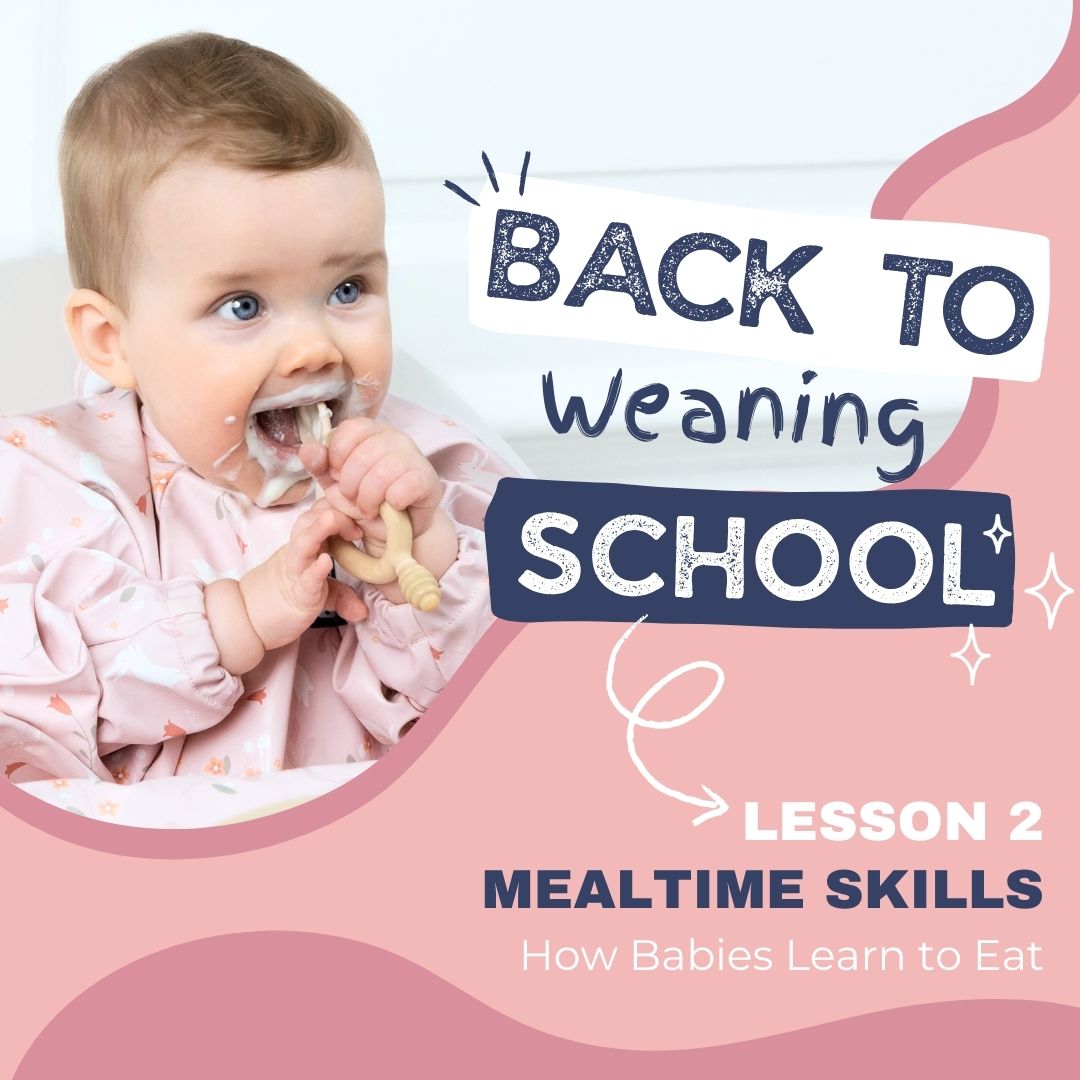
Mealtime Skills: How Babies Learn To Eat
In Lesson 1 of our Back to Weaning School series, Weaning 101, we answered 20 of the questions parents ask most about starting solids. Now it’s time for Lesson 2 — and a closer look at what’s actua...
Read more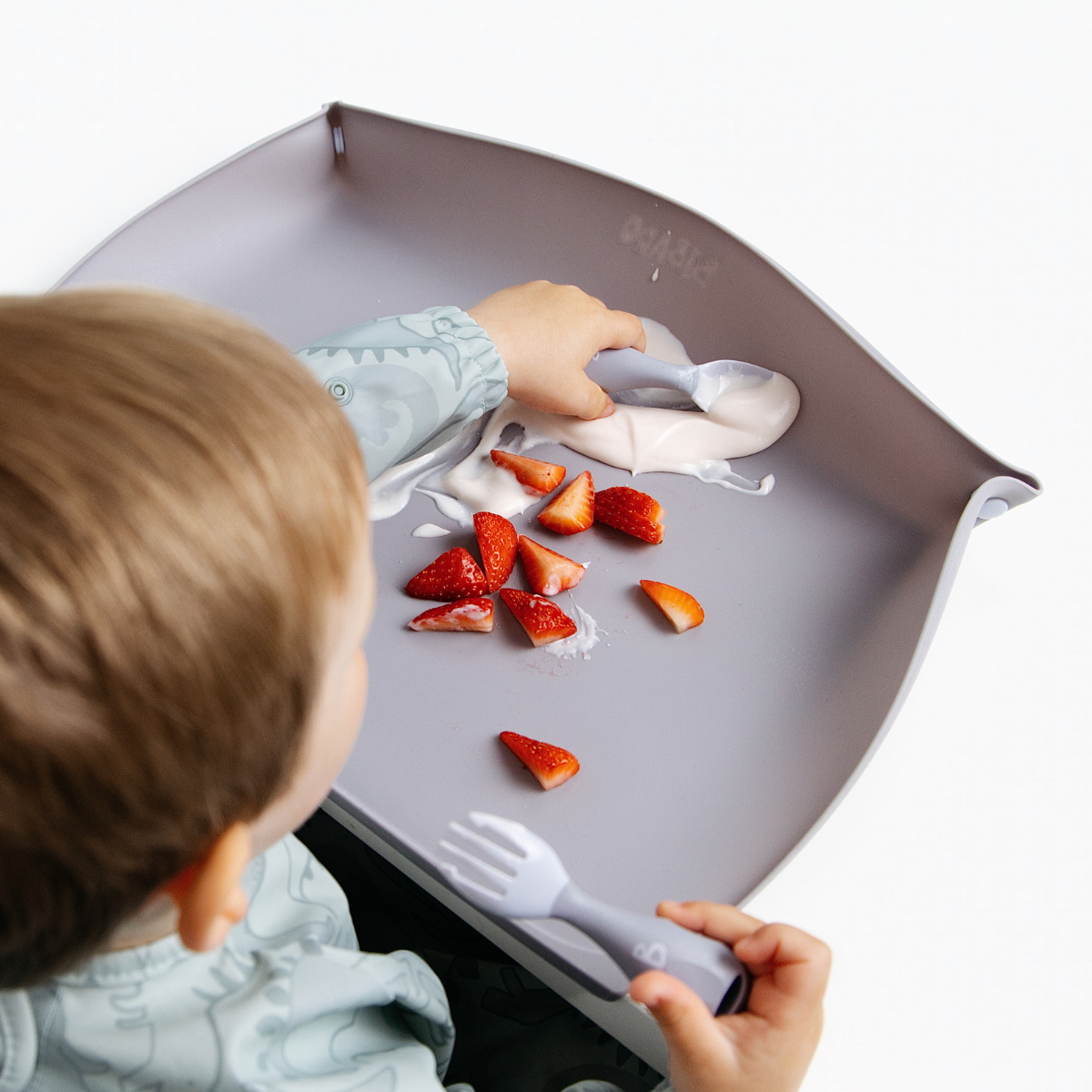
Baby Weaning Placemat for Food Exploration: Meet Dine & Discover™
Give them space to explore: meet the Dine & Discover™ Weaning Placemat For babies, eating starts long before food reaches their mouth. They look at it. Reach for it. Touch it. Squash it. Smear...
Read moreFollow us for more delicious, nutritious bite-size Bibado goodness
