Mealtime adventures are better with Bibado! Let our award-winning products make a difference to your weaning journey.
 Shop Now

BASKET
Your basket is empty
Mealtime adventures are better with Bibado! Let our award-winning products make a difference to your weaning journey.
Shop Now
If you’ve ever watched your baby smear avocado across their highchair tray, throw spaghetti on the floor or dredge their own face and hair in porridge, you might have wondered: Is all this mess really necessary? The short answer is: absolutely yes! And it’s actually a key part of your baby’s development.
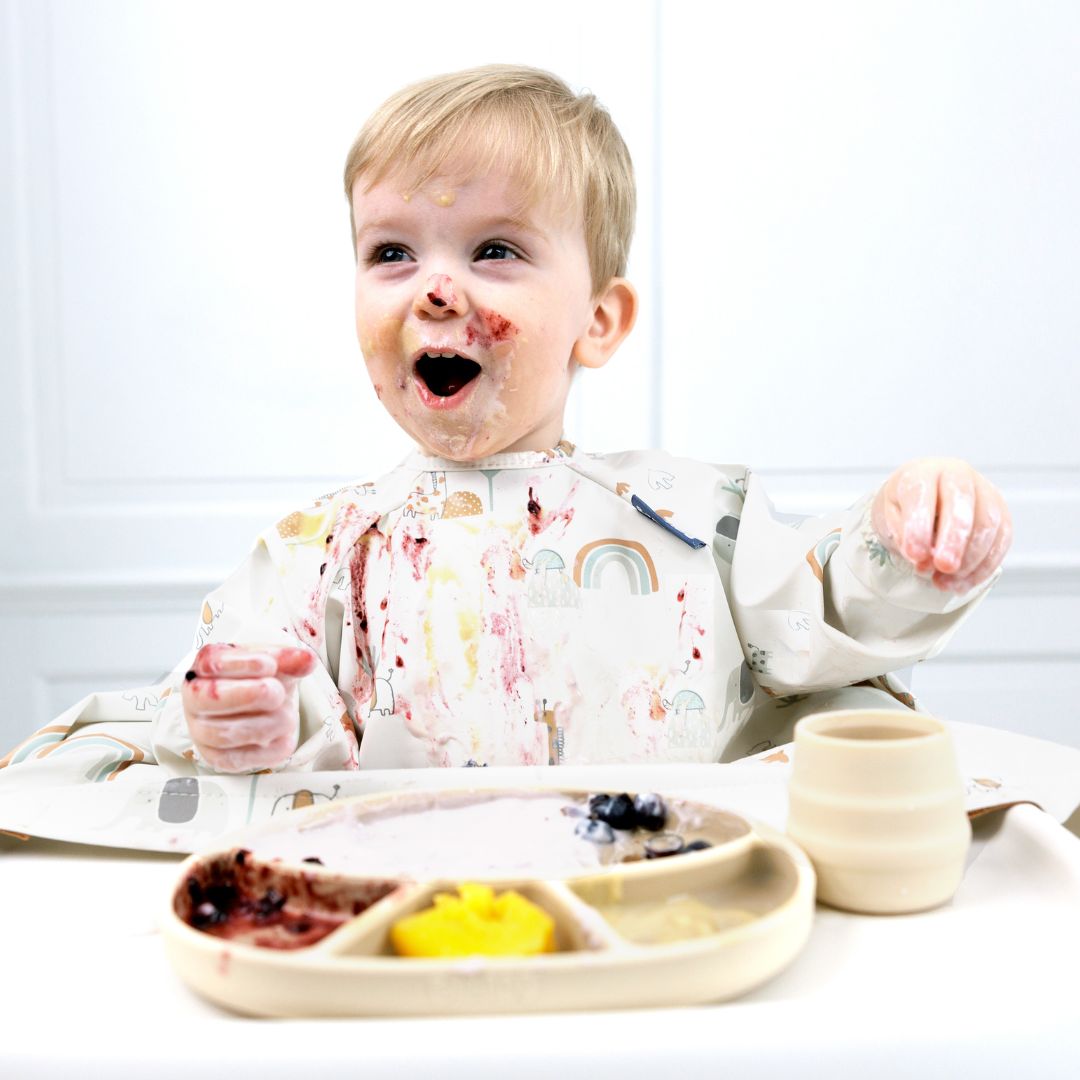
If you’ve ever watched your baby smear avocado across their highchair tray, throw spaghetti on the floor or dredge their own face and hair in porridge, you might have wondered: Is all this mess really necessary? The short answer is: absolutely yes! And it’s actually a key part of your baby’s development.
Messy play isn’t just fun; it’s a powerful driver of development. During baby-led weaning, babies explore food with all their senses: touching, squishing, smelling, and tasting. When all of these sensory pathways are firing at once, it stimulates rapid brain activity and the release of growth-supporting hormones linked to neural development. These rich, hands-on experiences help build stronger neural connections as well as supporting fine motor skills, hand-eye coordination, crossing the midline, and even the development of mouth muscles needed for chewing and speech.
Together, this makes weaning one of the single most important windows in your baby’s day for development—and making the most of it is surprisingly simple and low-cost: just offer the opportunity, embrace the mess, and let them explore.
Babies learn about the world through their senses. When a baby interacts with food, they engage all of their senses, plus their coordination, memory and more... Feeling the difference between a squishy banana and a firm carrot helps them understand textures, which is important for their cognitive recognition further on.
This hands-on, multi-sensory exploration supports babies’ overall development, helping them learn about the world around them and build important foundations: for example how they think, learn, and interact as they grow.
Handling food strengthens the small muscles in your baby’s hands and fingers, which are vital for self-feeding and later skills like writing and drawing. Dropping, grabbing, and even throwing food may look like chaos, but it’s actually practicing fine motor skills in a safe environment.
And when food gets dropped (again and again!) babies are also discovering cause and effect - learning that their actions have predictable outcomes, which is a key building block for early problem-solving.
Allowing babies to make a mess helps them learn independence. When they explore food without constant interference, they gain confidence in self-feeding, making mealtimes less stressful and more enjoyable for both baby and parent.
Messy play encourages problem-solving and curiosity. Babies test what happens when they drop food or mix textures. They also learn patience and persistence as they try new foods, learn how to use cutlery or grasping and gripping new textures with varied levels of success.
While mess is important, it doesn’t mean mealtimes have to be overwhelming. Using tools like full-coverage weaning bibs, such as the Bibado Coverall Bib, protects clothes and highchair trays while still letting your baby explore freely. This allows them to engage fully in messy play without creating extra stress for you.
Messy play is not just inevitable, it is essential for healthy development. It supports sensory exploration, fine motor skills, independence, and cognitive growth. By embracing a little chaos at mealtimes and using practical tools to make the clean-up easier, you’re helping your baby learn, grow, and enjoy food in a safe, positive way.
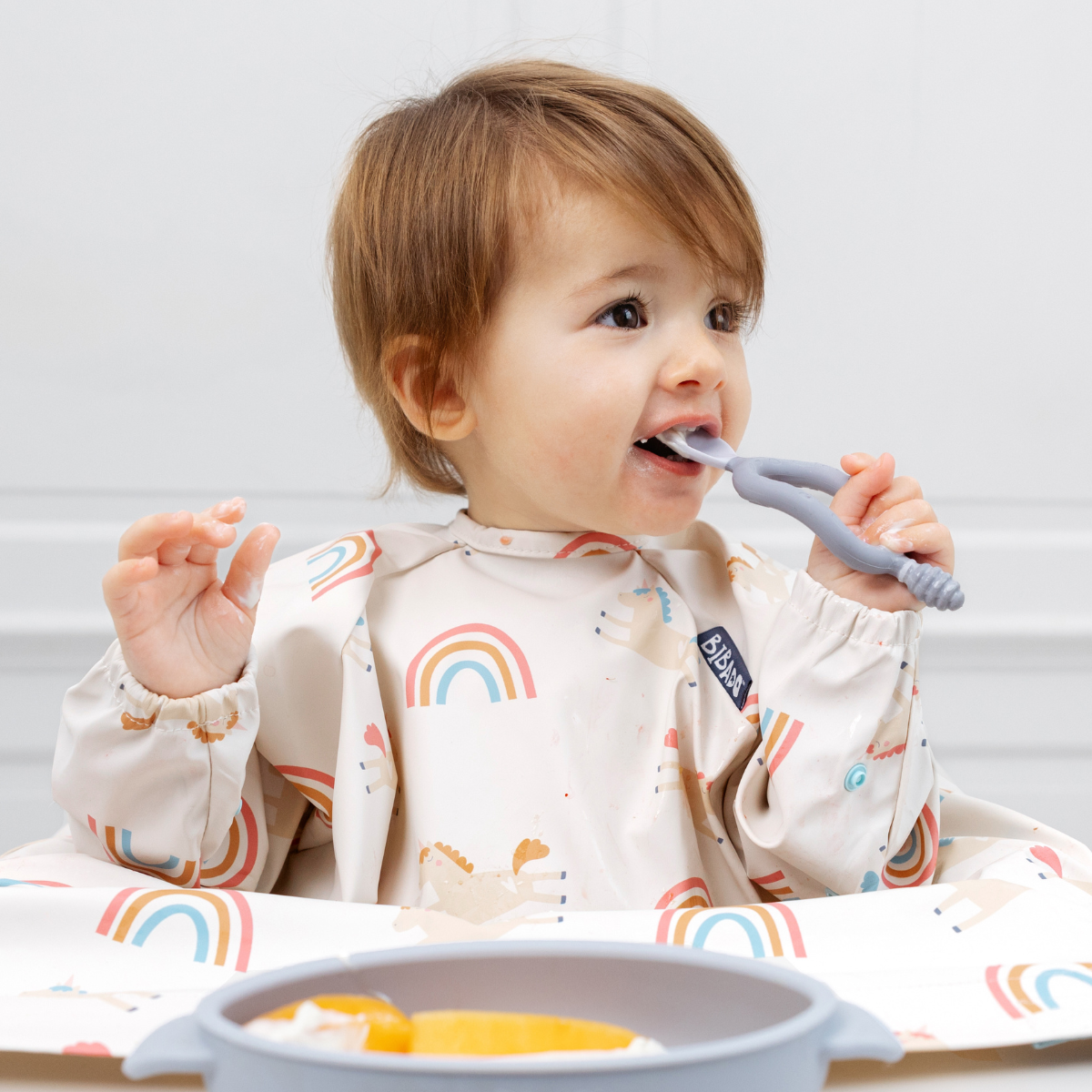
The Best Bibs for Baby-Led Weaning (Why Coveralls Are a Game-Changer)
From yoghurt-covered sleeves to spaghetti in their lap, babies love to explore food with their hands - which is exactly what baby-led weaning encourages. Choosing the right bib can make a huge diff...
Read more
Pros and Cons: Do Coverall Bibs Really Work?
If you’re in the messy phase of baby‑led weaning, you may have heard about coverall bibs — the full‑coverage bibs with sleeves that go beyond a standard bib. But you might be wondering: Do they act...
Read moreFollow us for more delicious, nutritious bite-size Bibado goodness
