Baby-led weaning is an exciting milestone. Watching your baby explore new foods, develop their independence and learn to self-feed is incredibly rewarding. But as most parents quickly discover, it can (and should!) also be very messy.
We encourage you to get involved with the messiest mealtimes wherever possible, allowing little eaters the opportunity to explore without limits. Every mealtime is a full sensory lesson: When babies touch, squish, smell, and taste food, they’re engaging all of their senses and releasing essential growth hormones to support overall brain development. Exploring different textures, colours, and temperatures helps their brain categorise and make sense of the world.
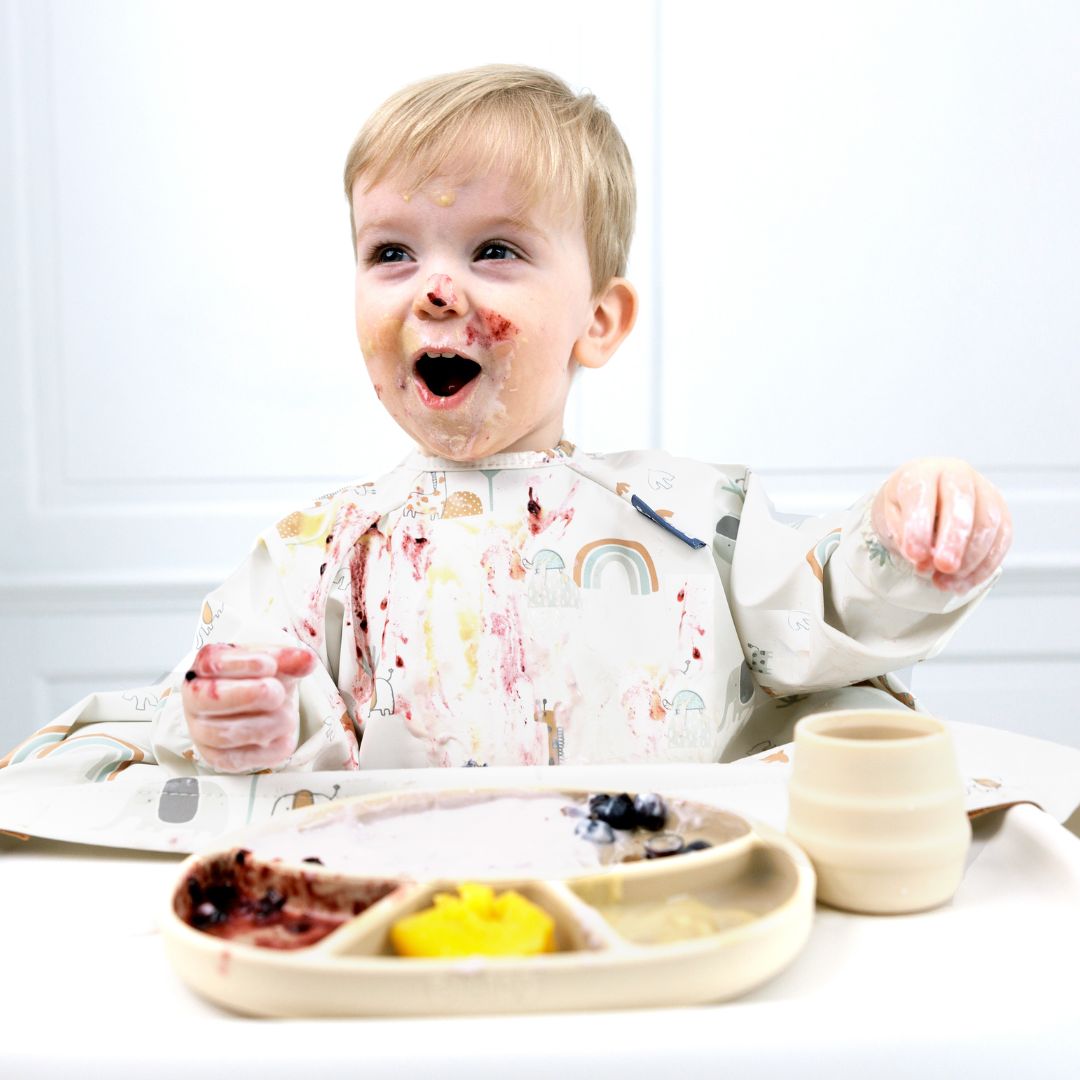
From yoghurt-covered sleeves to spaghetti in their lap, babies love to explore food with their hands - which is exactly what baby-led weaning encourages. Choosing the right bib can make a huge difference to how enjoyable (and manageable) those messy mealtimes are.
But with so many options available, which bib actually works best for baby-led weaning?
Why the Right Bib Matters
Baby-led weaning is all about allowing babies to explore food independently. They grab, squish, smear and experiment with textures as they learn how to eat.
This sensory exploration plays an important role in development, helping babies become confident eaters. But it also means food rarely stays on the plate.
A good weaning bib should protect your baby’s clothes while allowing them the freedom to explore food without parents constantly worrying about the mess.
Common Types of Weaning Bibs
Dribble Bibs
Dribble bibs are great for catching milk and drool throughout the day, but they’re not designed for mealtimes.
Because they’re small and made from absorbent fabric, they quickly become soaked during feeding and leave most of your baby’s clothes exposed.
Silicone “Pelican” Bibs
Silicone bibs with a food-catching pocket — often called pelican bibs — are a popular weaning option.
The pocket can catch some dropped food, and they’re easy to wipe clean. However, they only protect the front of your baby’s chest. Arms, sleeves and laps are still completely exposed, meaning clothes underneath often end up messy.
Sleeved Bibs
Sleeved bibs offer more coverage than traditional bibs by protecting your baby’s arms and upper body.
While they help reduce messy sleeves, most stop at the waist. Food still falls into your baby’s lap or down the highchair, so outfit changes and clean-ups are still common and can lead to disruptive mealtime 'hovering'.
Why Coverall Bibs Work Best
For baby-led weaning, full coverage makes a huge difference.
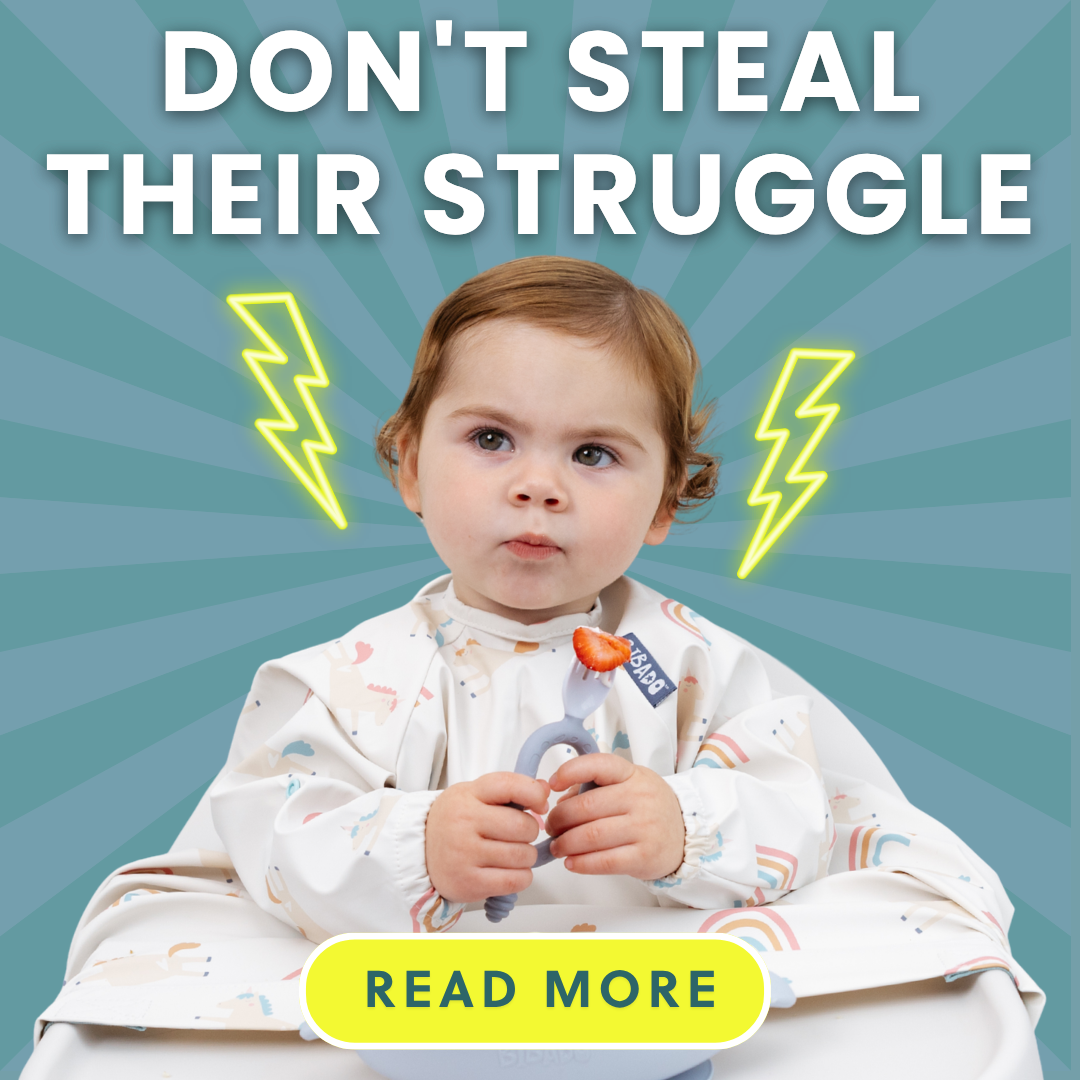
Coverall bibs are designed to protect not just the chest, but also your baby’s arms, lap and the space between them and the highchair. This allows babies to explore food freely while keeping their clothes clean underneath.
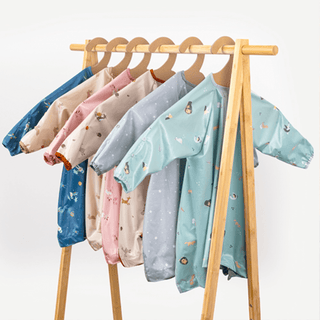
The Bibado Coverall Weaning Bib takes this one step further with a design specifically created for messy self-feeding.
What Makes the Bibado Coverall Different
1. It Attaches to the Highchair
The Bibado coverall features a unique strap that attaches directly to the highchair tray. This creates a catch-all area that prevents food from falling into your baby’s lap or onto the chair.
For parents, this means fewer outfit changes and much easier clean-up after meals. Even more importantly, food dropped doesn’t end up on the floor - giving them the opportunity to try again and again thereby increasing exposure and experience through trial and error, while also minimising food waste.
2. Full Outfit Protection
Unlike standard bibs, the coverall design protects your baby’s arms, chest and lap.
Adjustable fastenings ensure a comfortable fit while keeping clothes underneath clean and dry - even during the messiest of mealtimes.
3. Encourages Confident Self-Feeding
When parents aren’t constantly worrying about mess, babies get more freedom to explore food. This encourages them to practise picking up food, experiment with textures and build confidence with self-feeding.
Self-feeding plays a vital role in babies’ cognitive and physical development. As they explore food independently, they build brain connections, strengthen coordination, and develop fine motor skills through hands-on experience. These are just a few examples—this everyday activity supports a wide range of developmental milestones and lays important foundations for future learning and independence.
4. Quick and Easy Clean-Up
The easy-wipe fabric means most mess can be cleaned in seconds, and the bib can also go straight in the washing machine when needed.
For busy parents, this can make a big difference to daily mealtime routines.
The Best Bib for Baby-Led Weaning
While traditional bibs and silicone pocket bibs can help a little, they don’t offer the full protection needed for messy baby-led weaning.
A full-coverage coverall bib keeps your baby clean while allowing them to explore food without limits.
That means less stress for parents, less laundry, and much more enjoyable mealtimes for everyone. This helps you create positive early experiences while your baby explores textures safely, building their confidence and allowing them to practise key skills like self-feeding and hand-eye coordination, all while embracing the power of sensory learning.
Shop our best-selling Coverall Weaning Bib here (and it's currently on a 2 for £30 offer, too!).
 Shop Now