Mealtime adventures are better with Bibado! Let our award-winning products make a difference to your weaning journey.
 Shop Now
BASKET
Your basket is empty
Mealtime adventures are better with Bibado! Let our award-winning products make a difference to your weaning journey.
Shop Now
In Serve This, Not That, our resident expert, Lucy Upton, The Children’s Dietitian, breaks down exactly how to prepare and serve common foods safely to minimise choking risks.
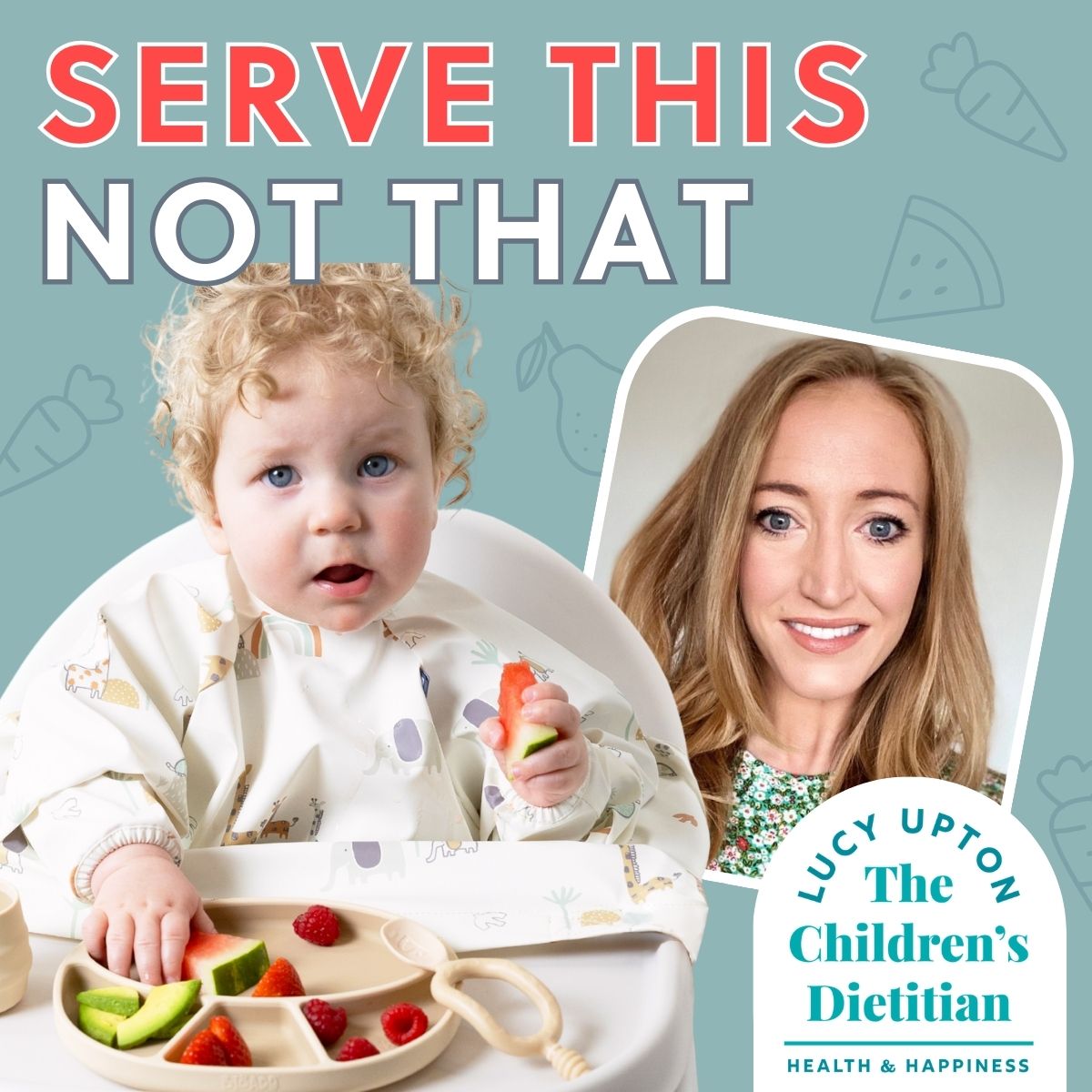
In Serve This, Not That, our resident expert, Lucy Upton, The Children’s Dietitian, breaks down exactly how to prepare and serve common foods safely to minimise choking risks.
Before we get started, it’s important to understand that gagging and choking are not the same.
Gagging is a normal, protective reflex, especially during weaning. It’s how babies learn to move food around their mouths safely. Gagging can look dramatic, but it’s usually noisy, brief, and self-resolved. Importantly, it’s a sign your baby is learning vital oral skills.
Choking, on the other hand, is silent and dangerous, and happens when food blocks the airway. While choking risks should always be taken seriously, avoiding gagging altogether isn’t the answer.
When babies are only offered very smooth or soft foods for too long, they miss the chance to practise managing textures. This can delay skill development and, over time, make eating harder—not safer.
Allowing safe opportunities for gagging (with appropriate food prep and supervision) helps babies:
The goal of weaning isn’t to eliminate all risk — that’s impossible. The goal is to manage risk by:
With the right preparation and guidance, babies can safely learn to eat a wide range of foods — and build the skills that actually reduce choking risk over time. So, let’s start by looking at some of the higher-risk foods that you need to know how to prep and serve. This is by no means exhaustive, so bear in mind that even if a food is soft, it is often the shape that poses the risk.
Serve this: Quartered grapes, cut lengthwise. Halving lengthwise is not enough for early eaters
Not that: Whole grapes. Ensure pieces are no longer round or cylindrical.
Serve this: Quartered tomatoes, cut lengthwise. Halving lengthwise is not enough for early eaters
Not that: Never serve whole cherry tomatoes. Do not slice into round discs.
Serve this: Squash/flatten each blueberry between your fingers or with the back of a spoon
Not that: Never serve whole. They’re small, round, firm and slippery, making them a high-risk choking hazard.
Serve this: Batons (approximately two adult fingers in size). They should be cooked until very soft. They should squish very easily under pressure between your forefinger and thumb. Not that:
Not that: Raw and hard vegetables should never be served to babies. They are too hard to bite and chew, and pose a choking hazard. It’s also crucial not to serve coin-shaped or circular pieces of cooked carrot, as these can easily block the airway.
Serve this: Smooth nut butter - use smooth, not crunchy spread thinly on toast fingers, or stirred into porridge or yoghurt. Avoid thick globs and never feed directly from a spoon to baby, as the texture can be sticky and difficult to manage. Nut pastes can be thinned with yoghurt, milk, or puree to prevent stickiness. Alternatively, grind to a fine powder in a blender and mix into foods such as yoghurt, cereal, or baking.
NOTE: nuts are an allergen and, in line with updated guidance, should be introduced early in the weaning process. See NHS guidelines for appropriate introduction and quantities.
Not that: Nuts are hard, small, and difficult to chew, and should never be offered whole during weaning.
Serve this: Again, it’s the shape that poses the biggest risk. The safest way to serve sausages is to cut them lengthwise and then again so that you have long quartered pieces that baby can grasp in their palm. Remove the casing or skin if it’s tough or chewy.
Not that: Do not cut sausages into rounds or stubby pieces as they can block the airway. Ensure pieces are cylindrical.
You might find this obvious, but these foods should never be served to babies during weaning.
Marshmallows - Soft but highly compressible — can mould to and block the airway. Hard or sticky candy & boiled sweets - Solid and non-breakable in the mouth. Popcorn - Dry, irregular, and easily inhaled — a major choking risk. Whole grapes, cherry tomatoes, olives (other small round or cylindrical food items) - Round and slippery — must always be cut lengthwise and quartered until at least 12 months old Chunks of nut butter - Very sticky and difficult to clear from the airway.
From the very beginning, help your baby learn that mealtimes are calm and focused. Encourage eating while seated, avoid distractions, and teach that food is for chewing — not for playing, rushing, or moving around with.
Babies should always eat sitting fully upright in a stable, supportive high chair. Feeding in car seats, bouncers, prams, or cots increases the risk of choking because the airway is not properly aligned for safe swallowing.
Babies learn by watching. Eating together, modelling slow chewing, taking manageable bites, and staying seated help your child copy safe eating behaviours and develop confidence with food.
Strong mouth and jaw muscles are essential for safe chewing and swallowing. Offering a variety of appropriate textures over time helps babies practise biting, chewing, and moving food around the mouth — skills that support choking risk reduction as they grow. There’s also a lot you can do to help your little one prepare for weaning before they reach 6 months old. Introducing a mouth-muscle teether like Dotty the Dinosaur can provide a full-mouth muscle workout, strengthening the lips, cheeks, tongue, and gums in readiness for weaning.

When Weaning Feels Hard: Finding a Path Through the ‘Picky’ Phase
Weaning is often described as a journey of discovery, but for many parents, that journey can feel more like a series of roadblocks. If your little one has started turning their head away, refusing ...
Read more
8 Expert-Approved Weaning Tips: Before & During
Lucy Upton shares 8 practical, expert-backed tips to give you the best start to Baby-Led Weaning possible, and how best to support your baby once food is on the menu.
Read moreFollow us for more delicious, nutritious bite-size Bibado goodness
