Mealtime adventures are better with Bibado! Let our award-winning products make a difference to your weaning journey.
 Shop Now
BASKET
Your basket is empty
Mealtime adventures are better with Bibado! Let our award-winning products make a difference to your weaning journey.
Shop Now


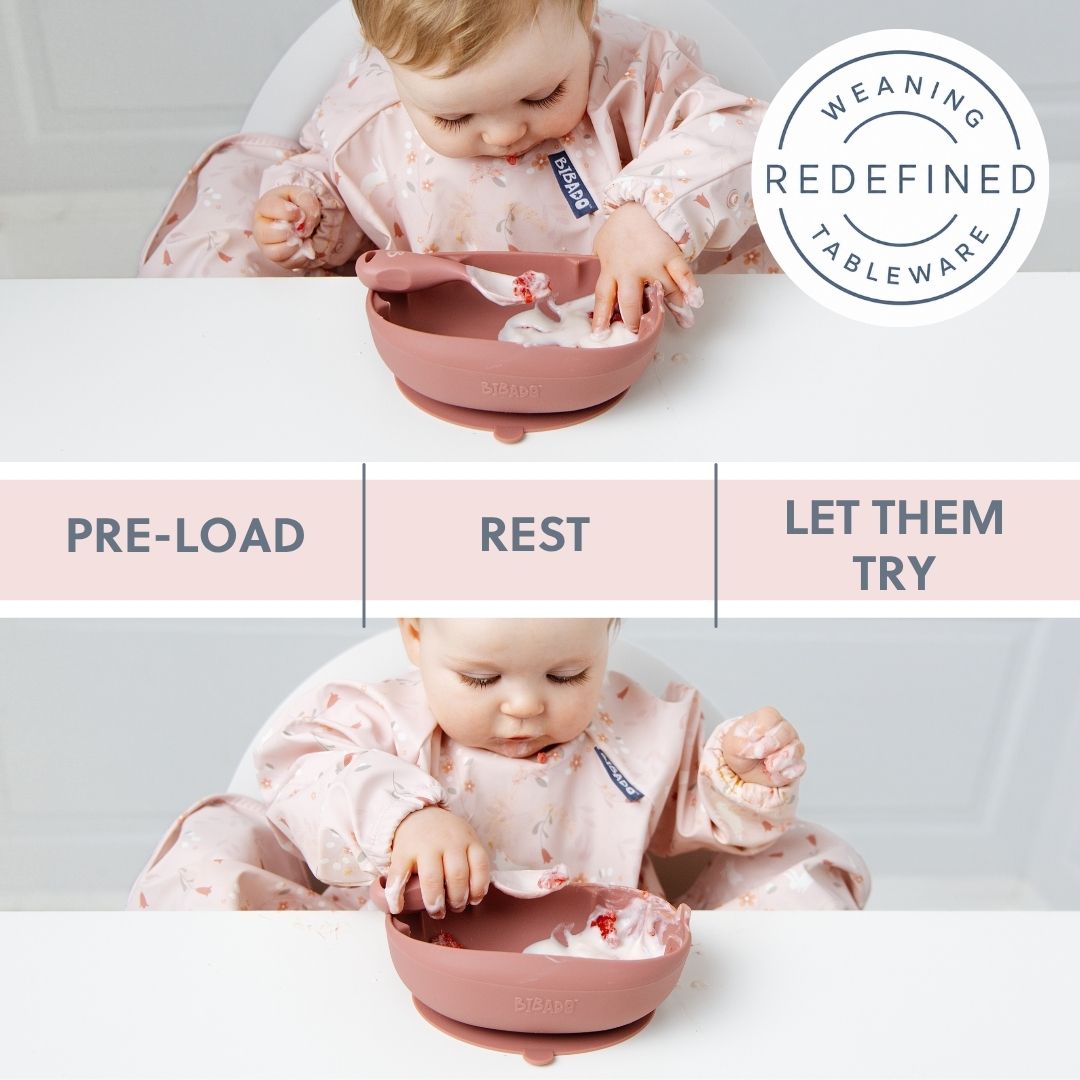


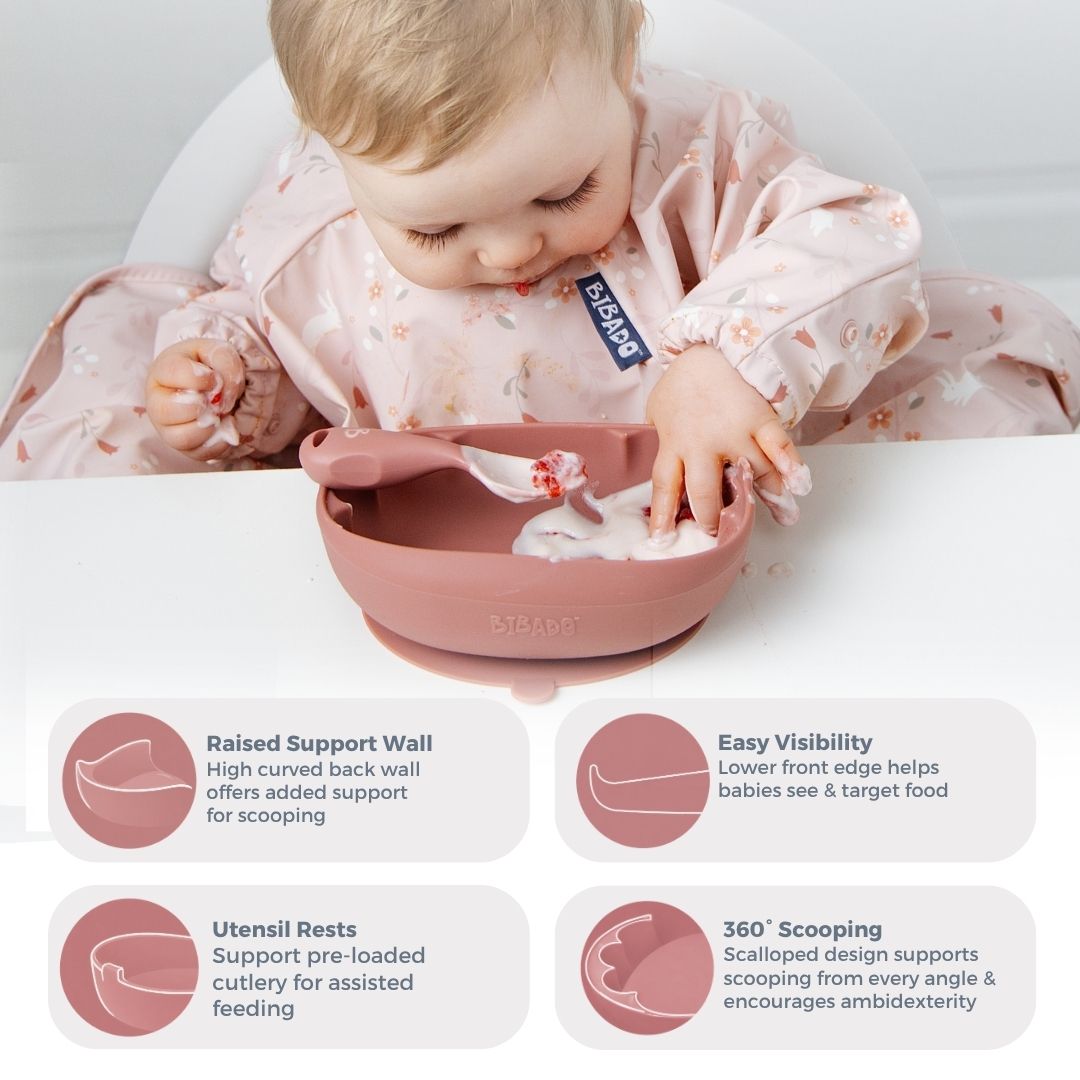


The Bibado Learning Curve™ Silicone Suction Weaning Bowl was developed with a paediatric dietitian to make first scoops easier to practise. Scalloped curves create helpful catch points around the bowl, giving little hands something to scoop against from more angles, while built-in utensil rests keep preloaded spoons within easy reach. A stay-put suction base keeps the bowl stable as babies reach, grasp, scoop and self-feed — turning everyday meals into more opportunities to practise independence.
How does the Learning Curve™ Bowl support self-feeding?
Its shape helps babies retrieve food more successfully, while the utensil rests create an easy place for parents to preload and leave a spoon for baby to pick up independently.
Why are preloaded spoons helpful for early self-feeding?
Before babies can scoop confidently for themselves, picking up a loaded spoon lets them practise the reach-grasp-lift-to-mouth sequence that sits underneath independent utensil use.
What skills are babies practising when they scoop from a bowl?
Scooping asks babies to coordinate what they see with the movement of their hand and utensil, while gradually refining grip, direction and control.
Why does repetition matter when babies are learning to use cutlery?
Self-feeding is a skill built through repeated attempts. Making the setup more supportive gives babies more chances to practise the same movements and learn what works.
How can parents support without taking over?
Preload the spoon, rest it within reach and let your baby do the next part. It gives them useful support while keeping the reaching, grasping and feeding attempt theirs to work out.
How do the scallops help babies learn to scoop?
The scalloped curves create multiple catch points around the bowl, so babies have something to work against from more angles instead of chasing food around a smooth edge.
What are the built-in utensil rests for?
The integrated rests keep preloaded weaning spoons — including Bibado Handi Cutlery — within easy reach, so babies can practise reaching, grasping, lifting and bringing the utensil to their mouth.
Why is a suction base useful for a baby weaning bowl?
The stay-put suction base helps keep the bowl stable while little hands are learning, so babies can focus on scooping and self-feeding rather than controlling a moving bowl.
Can the Learning Curve™ Bowl be used for both spoon-feeding and baby-led weaning?
Yes. It is designed to support independent self-feeding, parent-assisted feeding and a combination of both, so you can adapt how you use it as your baby's skills develop.
How is the Learning Curve™ Bowl different from a standard suction bowl?
Most bowls are designed primarily to contain food. The Learning Curve™ Bowl adds purposeful scoop points and utensil rests to create more opportunities for babies to practise the movements involved in self-feeding.
How does the Learning Curve™ Bowl support self-feeding?
Its shape helps babies retrieve food more successfully, while the utensil rests create an easy place for parents to preload and leave a spoon for baby to pick up independently.
Why are preloaded spoons helpful for early self-feeding?
Before babies can scoop confidently for themselves, picking up a loaded spoon lets them practise the reach-grasp-lift-to-mouth sequence that sits underneath independent utensil use.
What skills are babies practising when they scoop from a bowl?
Scooping asks babies to coordinate what they see with the movement of their hand and utensil, while gradually refining grip, direction and control.
Why does repetition matter when babies are learning to use cutlery?
Self-feeding is a skill built through repeated attempts. Making the setup more supportive gives babies more chances to practise the same movements and learn what works.
How can parents support without taking over?
Preload the spoon, rest it within reach and let your baby do the next part. It gives them useful support while keeping the reaching, grasping and feeding attempt theirs to work out.
How do the scallops help babies learn to scoop?
The scalloped curves create multiple catch points around the bowl, so babies have something to work against from more angles instead of chasing food around a smooth edge.
What are the built-in utensil rests for?
The integrated rests keep preloaded weaning spoons — including Bibado Handi Cutlery — within easy reach, so babies can practise reaching, grasping, lifting and bringing the utensil to their mouth.
Why is a suction base useful for a baby weaning bowl?
The stay-put suction base helps keep the bowl stable while little hands are learning, so babies can focus on scooping and self-feeding rather than controlling a moving bowl.
Can the Learning Curve™ Bowl be used for both spoon-feeding and baby-led weaning?
Yes. It is designed to support independent self-feeding, parent-assisted feeding and a combination of both, so you can adapt how you use it as your baby's skills develop.
How is the Learning Curve™ Bowl different from a standard suction bowl?
Most bowls are designed primarily to contain food. The Learning Curve™ Bowl adds purposeful scoop points and utensil rests to create more opportunities for babies to practise the movements involved in self-feeding.
Bibado products are built to last. Shop with confidence with our 30 month Weaning Warranty - Learn More
Choose options

UK Shipping only £2.95

International Shipping Available

Easy Returns

30 Month Weaning Warranty
Learning to eat is a skill that needs to be learned. First scoops are hard, so we set out to design weaning tableware that works with babies and the eay they skills develop, rather than against them.
A smooth-sided bowl can leave babies chasing food around the edge before they have the control to load a spoon successfully.
We wanted to design a bowl that does more than stay on the table. Developed with a leading paediatric dietitian, the Learning Curve™ Bowl uses scalloped curves to create useful scoop points and integrated utensil rests to support the steps that come before confident independent scooping.
Preload. Rest. Let them practise. Parents can give just enough help to set up the attempt, then leave the reaching, grasping, lifting and eating to their little learner.
Crucially, self-feeding mealtimes are the single biggest opportunity for brain development in your baby's day - because they're the only time all of their senses are engaged, releasing additional neural growth hormone into their system. The less frustrated they are by self feeding, the more they stay engaged in this process, capitalising on the amazing developmental opportunity self-fed meals offer. So lowering the barrier to successful scooping, and prompting them to feed themselves by using preloaded cutlery matters more than you might think!
It is another example of Learning Curve™ tableware being purpose-built around how babies actually learn to eat — creating more opportunities to practise, without taking the learning away.


Suitable for babies and toddlers from the start of weaning, the Learning Curve™ Bowl supports early self-feeding whether you are baby-led weaning, spoon-feeding or combining both. Built-in utensil rests are especially useful before confident scooping develops, letting parents preload a spoon and leave it within reach, while the scalloped curves continue to support babies as they progress towards more independent cutlery use.


If you’ve got questions which we haven’t answered here, you can send our friendly Customer Services team a message, either by pressing the Chat button at the bottom of the page, or by filling in the form below.

of our flagship Bibado coveralls sold worldwide
major parenting / baby awards won by our products
The average time saved by surveyed parents per day
⭐⭐⭐⭐⭐ product reviews received


